
Introduction:
Leylani Wright’s life was tragically cut short on a day that should have been filled with the laughter and innocence of a seven-month-old baby. Instead, her final days were filled with pain and suffering after her mother, Breanna Wright, left her alone on an unsafe bed, resulting in irreversible harm that led to her death just days later. Despite prior warnings about the dangers surrounding the bed and Leylani’s health, the negligence continued, leading to a heartbreaking loss. This case has left the community in shock, grappling with the question of why the warning signs were ignored and what could have been done to prevent such a tragic end.
The Fatal Moment:
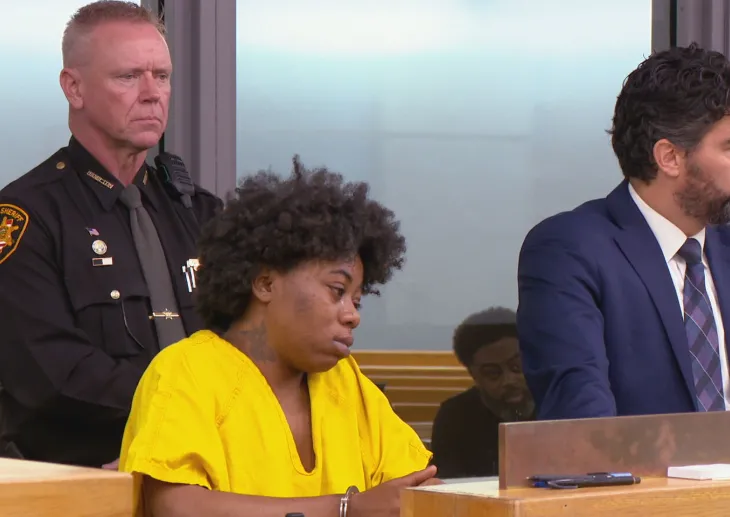
It was an ordinary day, or at least it seemed so to Breanna Wright. Like many young parents, she had her hands full with the demands of caring for her child. Leylani, a seven-month-old baby, was struggling with health issues and was particularly vulnerable. She had been left on a broken, unsafe bed—a place that had been flagged as dangerous multiple times. Yet, in a moment of careless neglect, Breanna stepped outside, leaving her baby behind, trusting that the situation would be fine.
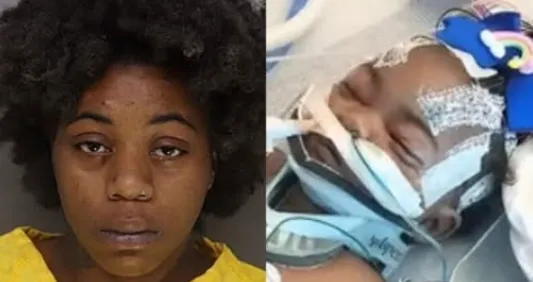
But it wasn’t fine. In the twenty minutes that Leylani was alone, her fragile body was exposed to the dangers of the bed. It was in these precious moments that she suffered life-altering harm. The injuries were so severe that they would eventually lead to her death, a few days later, after doctors determined the extent of the damage. It was a death that could have been prevented, a death that no one should ever have to endure, especially not a helpless child.
The Warnings Ignored:
Breanna Wright was no stranger to warnings. She had been advised multiple times about the unsafe nature of the bed where Leylani was left. There were concerns about the lack of proper support for her fragile body, and there were even previous reports suggesting that Leylani had been in precarious situations before. Yet, despite these warnings, the same dangerous routine continued. It was a cycle of neglect that ultimately culminated in tragedy.
The child had already been struggling with health concerns that made her more vulnerable. The combination of her delicate condition and the unsafe environment she was left in was a recipe for disaster. Yet, no intervention came. No one stepped in to ensure that Leylani was protected from harm, and in the absence of that protection, she paid the ultimate price.
The Aftermath:
When Leylani’s condition worsened, Breanna sought help, but by the time emergency responders arrived, the damage had already been done. The baby was rushed to the hospital, but the injuries were so severe that doctors knew there was little they could do. Leylani’s body had been irreparably harmed by the circumstances of her care. The decision was made, and the child who had once been filled with life was pronounced dead.
The heartbreak of that moment rippled through the community, and the ripple effect of the tragedy was felt far beyond just the immediate family. Questions flooded in—how could this happen? Why did no one step in sooner? What could have been done to prevent this loss of innocence and potential?
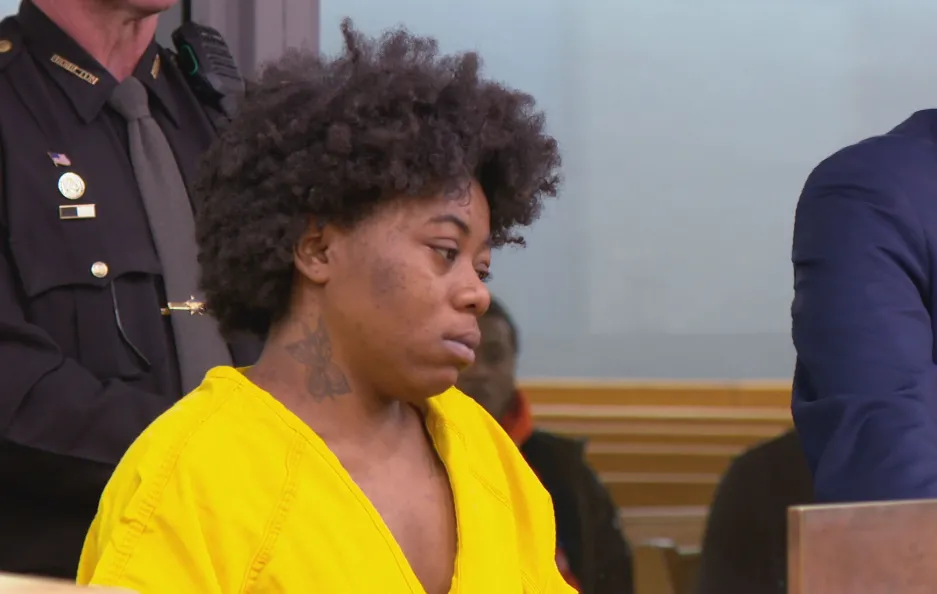
Breanna Wright now faces serious charges, including murder and child endangerment, for the death of her daughter. The legal system will have to decide the extent of her responsibility in this senseless tragedy. But for those who knew Leylani, the heartbreak of losing a young life far too soon remains the most painful reality.
May you like
American War Hero & Coal Miner: The Story of Charles Dennis Buchinsky
A Lifetime of Valor: The Legacy of Colonel Hayden A. Sears
Operation Starlight: The Marines’ First Major Test in Vietnam

A Community in Shock:
Leylani’s death left a community shaken and heartbroken. Carbondale, Illinois, where Leylani and her family lived, is a small town where everyone knows each other. The loss of such a young life, especially in such a preventable way, left people asking how it happened and why it was allowed to continue. The case has raised awareness about the importance of protecting vulnerable children and ensuring that dangerous situations are addressed before they lead to irreversible harm.
The community was left reeling as they reflected on their own roles in child protection. Had they missed the signs? Could they have done more? It’s the kind of heart-wrenching tragedy that brings up uncomfortable questions about personal responsibility and the duty to protect others, especially those who can’t protect themselves.
The Emotional Impact on Family and Friends:
For Breanna Wright, the emotional toll of losing her daughter is unimaginable. While the legal system may address the consequences of her actions, no punishment will ever undo the pain of the loss. Losing a child is the deepest sorrow a parent can endure, and in Breanna’s case, the circumstances of Leylani’s death only intensify the emotional devastation.
For Leylani’s extended family, the grief is just as profound. Leylani’s life was filled with love and potential. She was a precious baby who deserved every chance to grow and thrive. Instead, her life was cut short by neglect. The pain of that loss will forever haunt her loved ones, who will carry the weight of the “what could have been.”



The loss also extends to Leylani’s friends and community. Many people who knew the family, who had watched Leylani grow, are left to grapple with the shock of her death. They are left wondering how they could have helped, what signs they might have missed, and whether this tragedy could have been avoided.
The Questions That Remain:
As investigators continue to piece together the circumstances surrounding Leylani’s death, the questions multiply. What led to Breanna’s decision to leave her daughter in such a dangerous situation? Were there deeper issues that led to the neglect? How could a baby, so vulnerable, be left in such an unsafe environment, despite warnings from others?
These questions are part of the ongoing investigation, but the tragedy of Leylani’s death speaks to a larger issue of child safety, neglect, and the need for greater vigilance in protecting those who cannot protect themselves.
Conclusion:
Leylani Wright’s life was taken far too soon, and the heartbreak of her death is felt by all who knew her. It is a painful reminder of how fragile life is and how important it is to protect the most vulnerable among us. No child should ever have to suffer as Leylani did, and her death serves as a call for greater awareness, more vigilance, and stronger protections for children everywhere.
For Breanna Wright, the consequences of her actions are now in the hands of the legal system. But for Leylani’s family, the emotional scars will remain long after any trial is over. The pain of losing a child can never be fully healed, and the questions surrounding the tragedy will likely remain unanswered for years to come.
Leylani’s story is a devastating reminder that the loss of a child, especially one so young, is a tragedy that can never be undone. But it is also a call to action: to be more aware, to take responsibility, and to do everything in our power to protect those who cannot protect themselves.
A Farm Boy and a Soda: Lamoille, Iowa, 1939
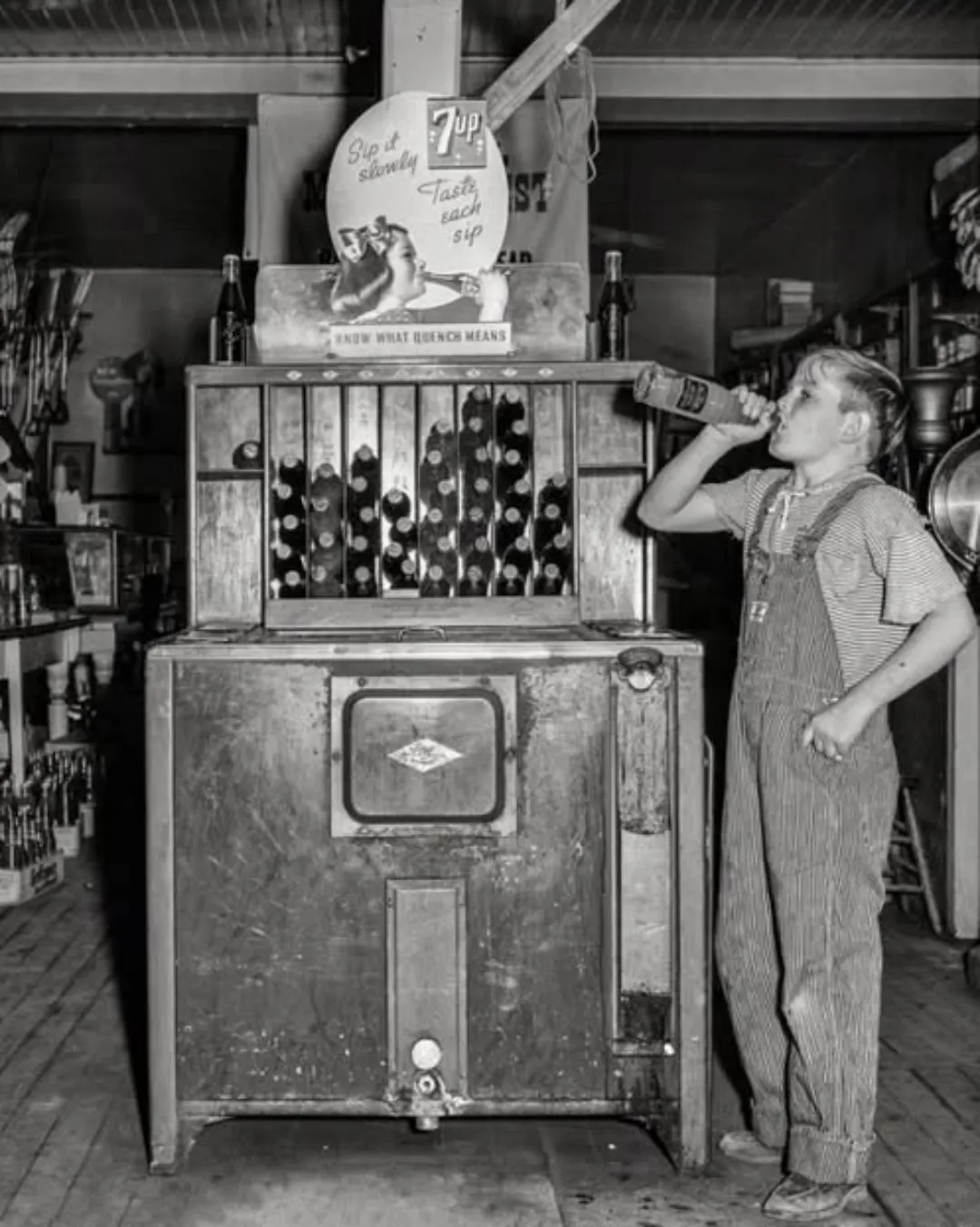
In 1939, in the small town of Lamoille, Iowa, a photographer captured a simple moment: a farm boy pausing at a general store, sipping a soda at a pop stand. At first glance, it’s an ordinary scene, the kind that might play out in any rural community. Yet, like so many images from the era, it tells a larger story—one of hardship, hope, and the quiet pleasures that sustained American life during uncertain times.
The year 1939 marked the tail end of the Great Depression, and while the national economy had begun to recover, rural America still felt its weight. Families in places like Lamoille lived by the rhythms of the land. Days were long, work was grueling, and rewards were modest. Children often rose before dawn to tend livestock, help with planting, or gather eggs before school. Leisure was rare, and when it came, it was treasured.
That is what makes the image of the boy drinking soda so striking. In his overalls, with the faint dust of farmland still clinging to him, he leans against the wooden counter, savoring a glass bottle of sweet fizz. To modern eyes, it might look like nothing more than a child enjoying a treat. But in 1939, a soda at the general store was more than refreshment—it was an event.
General stores were the heart of small towns across Iowa. They sold everything from nails and flour to fabric and seed, but they were also social spaces. Farmers exchanged news there, children lingered over penny candy, and teenagers gathered by the pop stand, swapping stories over a bottle of root beer or cola. In an era before televisions were common and when radios were still a luxury in some homes, the general store provided connection and community.
The soda itself symbolized more than sweetness. Carbonated drinks were still considered a luxury for many families, especially in rural areas where every penny counted. To sip one on a hot afternoon was to taste a bit of modernity, to feel part of a world larger than Lamoille’s quiet fields. Companies like Coca-Cola and Pepsi were already building national identities, and each bottle carried with it a promise of joy, youth, and escape—even if only for a few minutes.
The boy in the photograph embodies that moment of pause. Behind him, the weight of farm chores and family responsibility loomed. Ahead lay an uncertain future, with the storm clouds of global war already forming in Europe. But for that instant, leaning at the pop stand with his soda, he was simply a child enjoying a taste of sweetness.
Images like this are reminders of the resilience of ordinary people. Life in Iowa in 1939 was not easy. Droughts, falling crop prices, and the demands of survival shaped the lives of farm families. Yet children still laughed, neighbors still gathered, and small joys—like a soda at the general store—remained vital. They were the threads that kept communities together, even as the larger world shifted dramatically.
Looking back today, the photograph offers a window into an America that feels distant yet familiar. The boy’s posture, the soda bottle in hand, the wooden counter of the store—all evoke a slower, simpler pace of life. Yet the longing for small pleasures, the need for connection, and the sweetness of a moment’s pause are timeless.
In Lamoille in 1939, a soda was not just a drink. For a farm boy at a general store, it was a reminder that even in hard times, joy could be found in the simplest of things.Continue reading
He Went Up the Mountain Before Dawn and Never Came Back.
Dawn came slowly to the high country that Friday, the kind of pale winter light that makes the m…A Mother, a Prophecy, and a List That Ended Two Lives.Lori was the kind of mother people pointed to in the church parking lot, the kind whose laughter sou…She Was a Domestic Violence Counselor and a New Mother in Pain—Until the Night She Crossed the Guardrail at Niagara Falls With Her Two Children.The spray at Niagara Falls always looked like breath from something alive.A white, constant exhale t…A Quiet Georgia Town, a 911 Call, and the Teen Girl Accused of Killing Her Parents as They Slept.The quiet rural calm of Tyus, Georgia, was torn apart by a crime so disturbing that even seasoned in…A Routine Call on a Quiet Summer Night Ended the Life of 26-Year-Old Officer Mohamed Said in Melvindale.The summer night of July 21, 2024, settled gently over the city of Melvindale, Michigan.The air was…
Powered by Metaconex


Leave a Reply