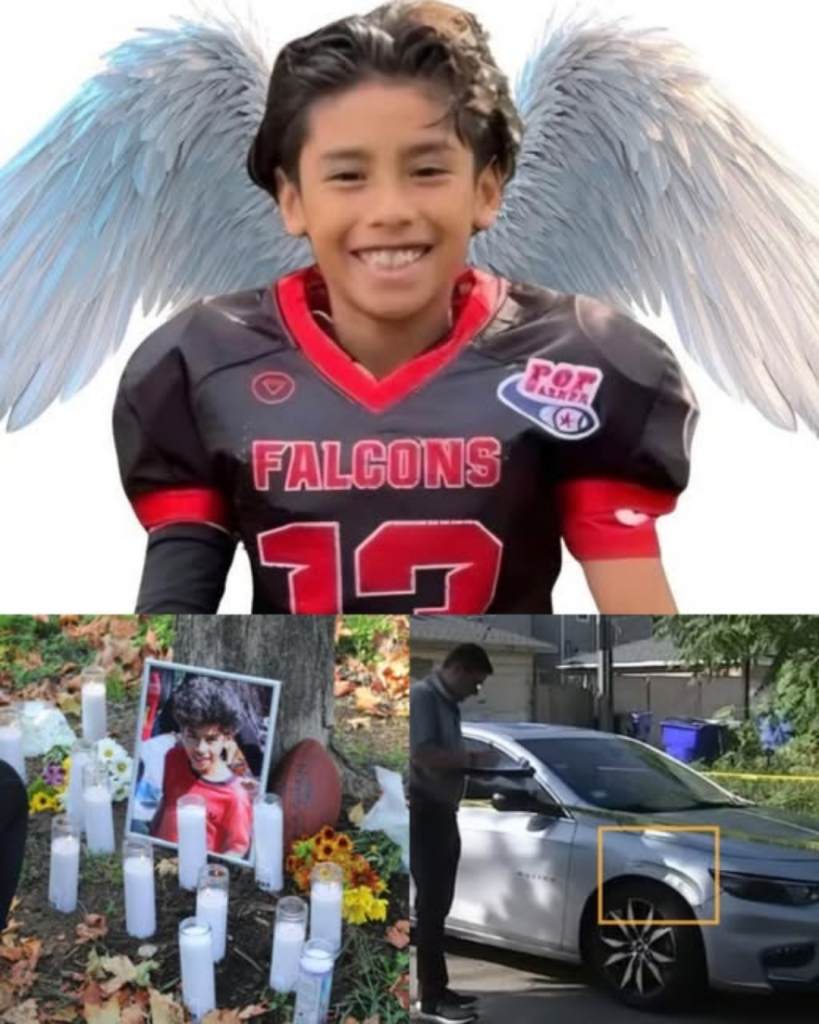
The morning of September 18 began like any other for the families near McNair Elementary School—a quiet hum of engines, children’s backpacks bouncing as they hurried across crosswalks, and parents rushing from drop-off to work. It was a routine millions of families across the country experience daily. But for 9-year-old Anakin Perez and his mother, Alejandra Gallegos, that familiar rhythm would turn into a nightmare that still reverberates through their community.
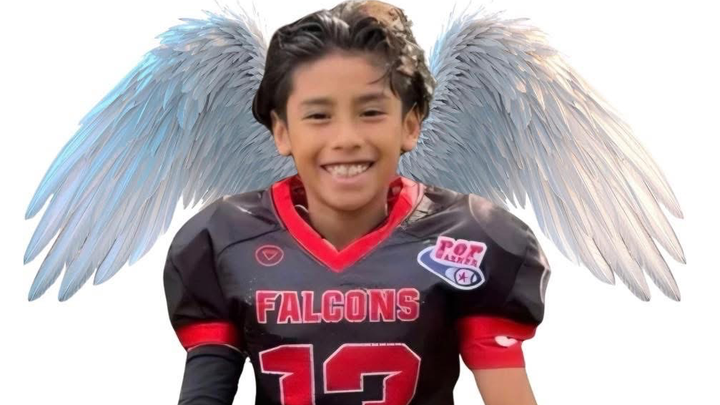
Anakin, a bright, playful boy with an infectious smile, was walking to school just like he did every morning. He was full of life, full of dreams—still at the age where the world feels big and exciting and full of endless possibility. His mother had kissed him goodbye earlier, unaware that this ordinary morning would end with the kind of grief no parent should ever carry.
As he stepped into the crosswalk, a vehicle approached—driven by another parent who had just dropped off her own child. What happened next remains burned into the memories of everyone who heard the screams, everyone who ran toward the chaos, and everyone who has stood at the crash site asking the same question:
Why?
The Collision
Investigators say the driver struck Anakin as he crossed, and instead of stopping, the vehicle continued moving—dragging the little boy beneath it. Witnesses later reported seeing no brake lights
, no swerving, no attempt to slow down or stop. Just the steady, horrifying movement of a vehicle carrying a child’s body 72 feet down the road.
Seventy-two feet.
Almost the length of two school buses.
The horror of the moment is nearly impossible to imagine. A boy on his way to school—books in his backpack, perhaps thinking about his day—suddenly caught beneath a car, pulled along pavement with no chance to escape.
Residents screamed. Bystanders waved their arms. Someone shouted for the driver to stop. But the vehicle kept moving until finally, finally, it came to a halt.
And then, in the chaos that followed, the driver fled.
A Mother’s Breaking Point
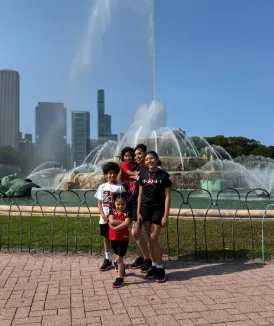
When the call came, Alejandra’s world collapsed.
“You mean to tell me you didn’t have three seconds to stop your car immediately?” she said through tears.
May you like
American War Hero & Coal Miner: The Story of Charles Dennis Buchinsky
A Lifetime of Valor: The Legacy of Colonel Hayden A. Sears
Operation Starlight: The Marines’ First Major Test in Vietnam
“You didn’t feel the hit? You didn’t feel you dragging his body 72 feet down the street?”
Her words echo the disbelief shared by the entire community. Because any driver knows the jolt of hitting a pothole, the rumble of rolling over debris, the instant reaction of hitting the brake when something feels wrong.
But this driver didn’t stop.
Didn’t brake.
Didn’t get out to help.
She drove away.
Alejandra replayed the moment over and over, imagining her son’s last seconds, imagining him frightened and helpless. And then she asked the question haunting every parent in the neighborhood:
“How could another mother do this? How could she go home, hug her kids… and I can’t do that with my son anymore?”
The Driver’s History Comes to Light
As details emerged, rage began to eclipse bewilderment.
According to Anakin’s mother, the driver behind the wheel that morning had a long, alarming record:
- Multiple DUIs
- Previously pulled over with alcohol in her car
- Fourteen different traffic violations
- Involved in hitting not one, but two other people
And yet, on the day she killed a child, she was not arrested.
She was not charged with vehicular homicide.
She was not tested for alcohol impairment.
Instead—after dragging a 9-year-old down the street—she received a citation.
Just a citation.
Failure to exercise due care to a pedestrian in the road.
The community was stunned. Outraged. Furious.
How could the system fail so catastrophically? How could a child be dragged nearly the length of a basketball court and no felony charges be filed? How could a driver with a documented history of recklessness be treated as if she had simply rolled through a stop sign?
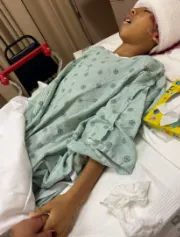
Witnesses Speak Out
Neighbors near McNair Elementary began coming forward.
“There were no brake lights. No nothing,” said Anakin’s aunt.
Another parent said they often witnessed this driver speeding, ignoring signs, or cutting around other cars. Reckless driving near the school was not new—but this tragedy made the consequences unavoidably real.
Parents stood on the sidewalks where their own children walked every morning, imagining how easily it could have been their sons or daughters.
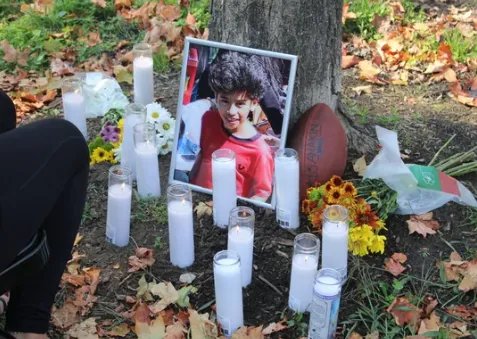
A Community in Mourning
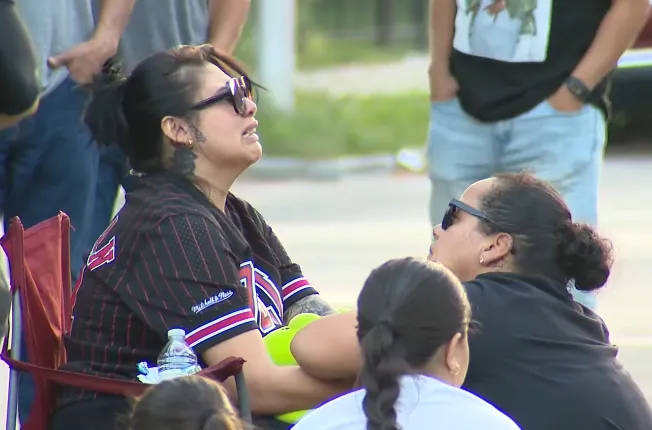
That night, the community gathered at the site where Anakin had been killed. They brought candles, flowers, stuffed animals, posters, photos—anything to express sorrow in a moment where words felt small and helpless.
Some cried openly.
Some hugged strangers.
Some simply stood in silence, unable to process the enormity of the loss.
But beneath the grief was a rising fire—a collective demand for change
.
Signs appeared among the memorial:
“Justice for Anakin.”
“Protect Our Kids.”
“School Zones Aren’t Optional.”
People began calling for:
- More crossing guards
- Flashing lights
- Stricter speed enforcement
- Police presence during drop-off
- Legislation to increase penalties for reckless driving near schools
Because this wasn’t the first time reckless driving had been reported near McNair Elementary. Parents had complained for months about speeding, rolling stop signs, texting drivers, and parents in a hurry endangering others.
Anakin’s death was not an isolated incident—it was the culmination of repeated warnings that went ignored.
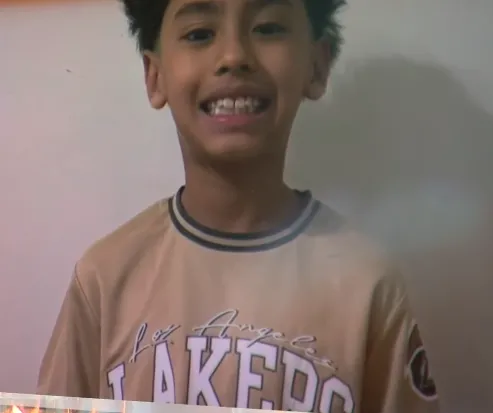
School District & Police Response
The school district announced that crossing guards were indeed on duty the morning of the crash. Grief counselors were brought in for students and staff, many of whom had known Anakin since kindergarten or pre-K.
The Maryland Office of the Attorney General confirmed they were investigating the incident, reviewing police actions, and determining whether additional charges should be filed.
But for Anakin’s family, no report, no investigation, and no official statement could touch the depth of their loss.
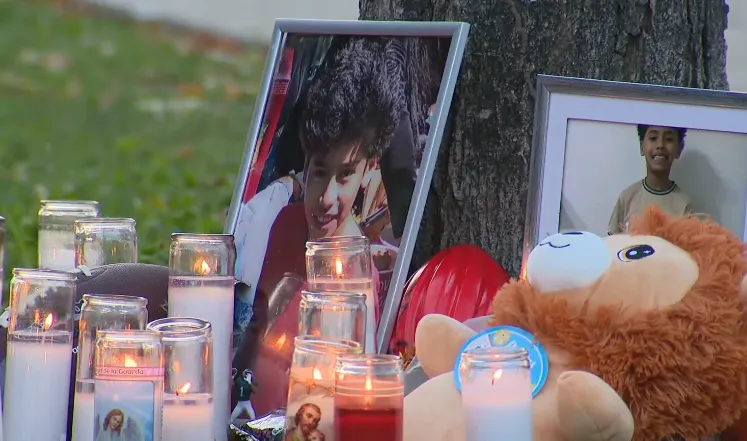
A Mother’s Voice, A Community’s Cry
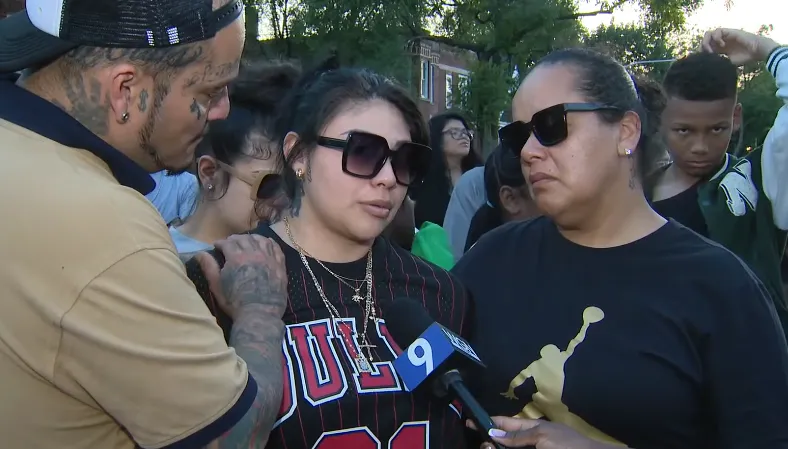
When Alejandra stood before the cameras at the memorial, her voice shook, but her message cut through the air with devastating clarity.
“I want justice for my son. He mattered. He mattered.”
She wasn’t just speaking for Anakin.
She was speaking for every child who walks to school.
For every parent who trusts the crosswalk signs.
For every family who believes their children are safe in a school zone.
Her pain became a rallying point. Her strength became a call to action.
Anakin’s Story
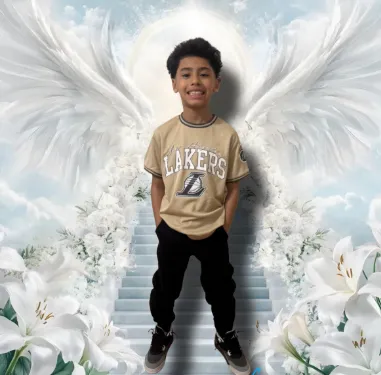
Before he became the center of an outrage, Anakin was simply a little boy.
He loved to draw.
He loved superheroes.
He loved his family.
He had a laugh that made everyone else laugh, too.
He was thoughtful, curious, and full of light.
He should have made it to school that day.
He should have run onto the playground with friends.
He should have come home with stories to tell.
Instead, his desk sits empty.
His toys remain untouched.
His mother’s arms remain empty.
The kind of loss that reshapes a life forever.



The Fight for Accountability
As the investigation continues, the community is demanding:
- Criminal charges
- Blood alcohol testing procedures
- A review of the driver’s record
- Transparency from law enforcement
- Policy reform for school zone safety
Because this isn’t just about punishment—it’s about protection.
If nothing changes, another child will be killed. Another family will stand where Alejandra stands. Another community will ask the same anguished questions.
And that is something no one is willing to accept.
Final Reflection
The death of 9-year-old Anakin Perez is not just a tragedy—it is a catastrophic failure of responsibility, accountability, and basic human care.
A child walking to school should never be dragged nearly a hundred feet by a vehicle.
A driver with a history of DUIs and reckless driving should never be on the road near children.
A family should never bury a child because the system treated warning signs like traffic inconveniences.
And yet, here we are.
A mother mourning.
A community demanding justice.
A little boy whose life was stolen before it even had the chance to unfold.
Anakin’s story is now a rallying cry—a plea for better laws, safer school zones, stricter enforcement, and a justice system that values the lives of children more than the convenience of drivers.
The community will not stop speaking his name.
Justice for Anakin.
Protection for every child.
The Day Her Little Girl Left Forever: A Mother’s Heartbreak and the Silent Struggle of Letting Go.
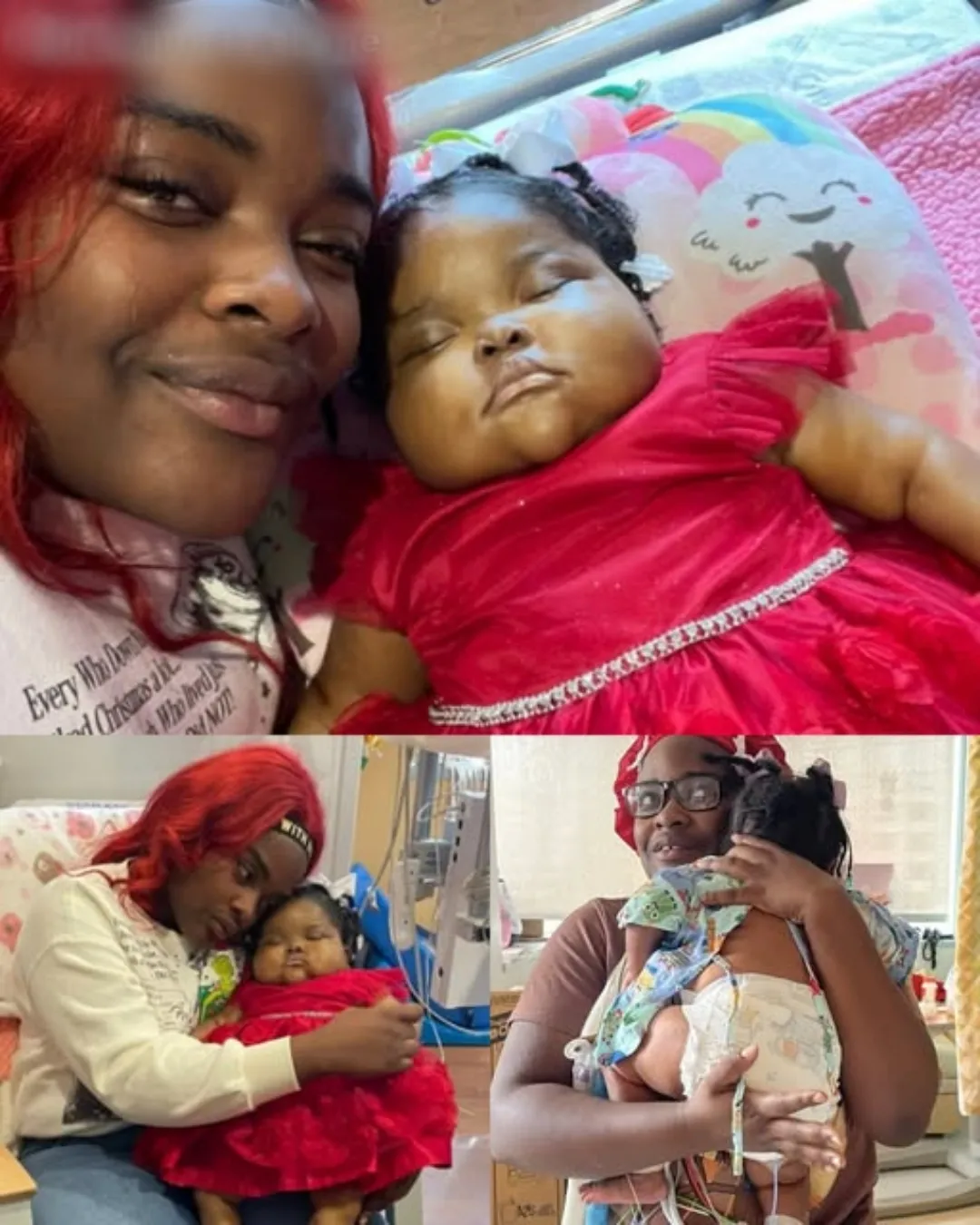
She never imagined her world could split in half in a single breath.
For so long, she had lived inside the rhythm of her daughter’s fragile heartbeat — a life measured in medication schedules, whispered prayers, and the quiet courage of a child who fought harder than most adults ever would.
Her daughter, Anariah, was small, delicate, but fierce in a way that defied her size.
Her smile seemed to bloom even on days when machines outnumbered hopes, and her tiny hands always reached upward, as if grasping at something only she could see — light, comfort, or perhaps the gentle promise of a world without suffering.
The mother had learned how to exist in this strange universe of hospital walls, late-night alarms, and the soft sounds of nurses adjusting tubes and blankets.
She learned to sleep upright, holding her daughter close without disturbing the wires that kept her stable.
She learned how to translate medical terms into prayers.
But nothing — nothing — prepared her for the moment her world shifted.
It happened quietly.
Not with sirens, not with chaos.
Just a soft stillness.
A pause so gentle it felt like the earth itself was holding its breath.
One moment, Anariah was here — warm, present, the center of her mother’s universe.
And in the next… a silence so deep it carved into the mother’s soul.
She tried to breathe.
But it felt like the air had disappeared from the room.
Like her lungs were made of broken glass.
She touched her daughter’s face one last time, memorizing the shape of her cheeks, the softness of her eyelashes, the delicate curve of her tiny lips.
She wanted to remember every detail, because remembering was all she had left.
Anariah had fought so hard.
Harder than anyone the doctors had ever seen.
Her body was fragile, but her spirit had always been fire — a small, determined flame refusing to be extinguished.
And even in the end, that flame did not go out.
It rose.
It lifted.
And the mother, through her tears, felt the truth settle inside her like a quiet revelation.
Her daughter was no longer suffering.
No more needles.
No more procedures.
No more medications that made her sleepy and disconnected.
No more fear flickering in her eyes when machines beeped too loudly.
Now, she was somewhere safe.
Somewhere whole.
Somewhere cradled in the arms of the Most High.
The mother felt this truth as surely as she felt her own heartbeat — a heartbeat now cracked, trembling, struggling to understand how to exist without the weight of her daughter in her arms.
Every morning since that day had been a battle.
She would wake, just for a second, in that half-dream place where memory hadn’t yet arrived, and she would forget.
Her mind would still expect to hear tiny breaths beside her, or the faint sound of her daughter’s restless rustling.
But then reality would hit her with brutal force.
A wave of truth so sharp it punched the air from her chest.
Her daughter was gone.
Gone from her arms.
Gone from the small routines that had become the mother’s entire purpose.
Gone from the world that felt dimmer now, as if light itself was grieving.
But love — love had not gone anywhere.
The mother felt it everywhere.
In her chest.
In her memories.
In the empty spaces her daughter once filled.
Love lived beside the pain, intertwined with it, inseparable.
She would sit alone sometimes, in the quiet hours when the night had settled like a soft blanket, and she would whisper to her daughter as if she were still in the room.
“I miss your weight in my arms.”
“I miss the sound of you breathing.”
“I miss the way you looked at me like I was your whole world.”
And then she would whisper the truth she carried like a lifeline:
“You were loved every second.
Every single second you were here.”
She remembered the nights she stayed awake, refusing to sleep in case her daughter needed her.
She remembered fighting alongside her, showing up to every appointment, every procedure, every terrifying moment with her heart in her throat but her hands steady.
She remembered begging for more time.
She would have traded anything — her sleep, her health, even years of her own life — just to give her daughter one more gentle sunrise.
But life had its own path, and grief had become the mother’s shadow, trailing her everywhere she went.
And still, she felt her daughter.
Not in a physical sense — that loss was real and unbearable — but in a deeper, almost spiritual way.
Like a presence just beyond sight.
Like a warmth she couldn’t explain.
Like a whisper in her heart reminding her that strength wasn’t the absence of pain, but the decision to keep moving even when breaking.
Some days, she wondered how she was supposed to go on.
How a person rebuilt a life when a piece of their soul was missing.
She didn’t have the answers.
But she kept trying.
Because trying was all she had left.
Trying, and carrying her daughter with her in everything she did.
She found small ways to honor her.
Lighting a candle.
Holding her favorite blanket.
Whispering her name during moments of quiet reflection.
And every time she did, she felt that connection — delicate, invisible, profound.
Her daughter was not gone.
Not really.
Not in the ways that mattered most.
She believed — truly believed — that Anariah was whole now.
Standing in light.
Wrapped in peace.
Held by the Most High.
And she believed that one day, when the world had finished unraveling and time had completed its slow healing, they would meet again.
Until then, she would grieve.
She would remember.
She would love with a heart both broken and full.
Her daughter had taught her that strength wasn’t loud.
It wasn’t dramatic.
Sometimes, strength was a breath.
A whisper.
A decision to stand up again even when the world had collapsed.
She carried that strength now — her daughter’s gift to her.
She would step into each new day with trembling hands but a determined heart, knowing that love had not abandoned her.
Knowing that her daughter lived on in every memory, every tear, every prayer whispered into the quiet.
And so she walked forward.
Slowly.
Cautiously.
But with love as her guide.
Her beautiful girl.
Her heart.
Her daughter — now resting peacefully with the Most High.
Until they meet again.Continue reading
He Went Up the Mountain Before Dawn and Never Came Back.
Dawn came slowly to the high country that Friday, the kind of pale winter light that makes the m…A Mother, a Prophecy, and a List That Ended Two Lives.Lori was the kind of mother people pointed to in the church parking lot, the kind whose laughter sou…She Was a Domestic Violence Counselor and a New Mother in Pain—Until the Night She Crossed the Guardrail at Niagara Falls With Her Two Children.The spray at Niagara Falls always looked like breath from something alive.A white, constant exhale t…A Quiet Georgia Town, a 911 Call, and the Teen Girl Accused of Killing Her Parents as They Slept.The quiet rural calm of Tyus, Georgia, was torn apart by a crime so disturbing that even seasoned in…A Routine Call on a Quiet Summer Night Ended the Life of 26-Year-Old Officer Mohamed Said in Melvindale.The summer night of July 21, 2024, settled gently over the city of Melvindale, Michigan.The air was…
Powered by Metaconex


Leave a Reply