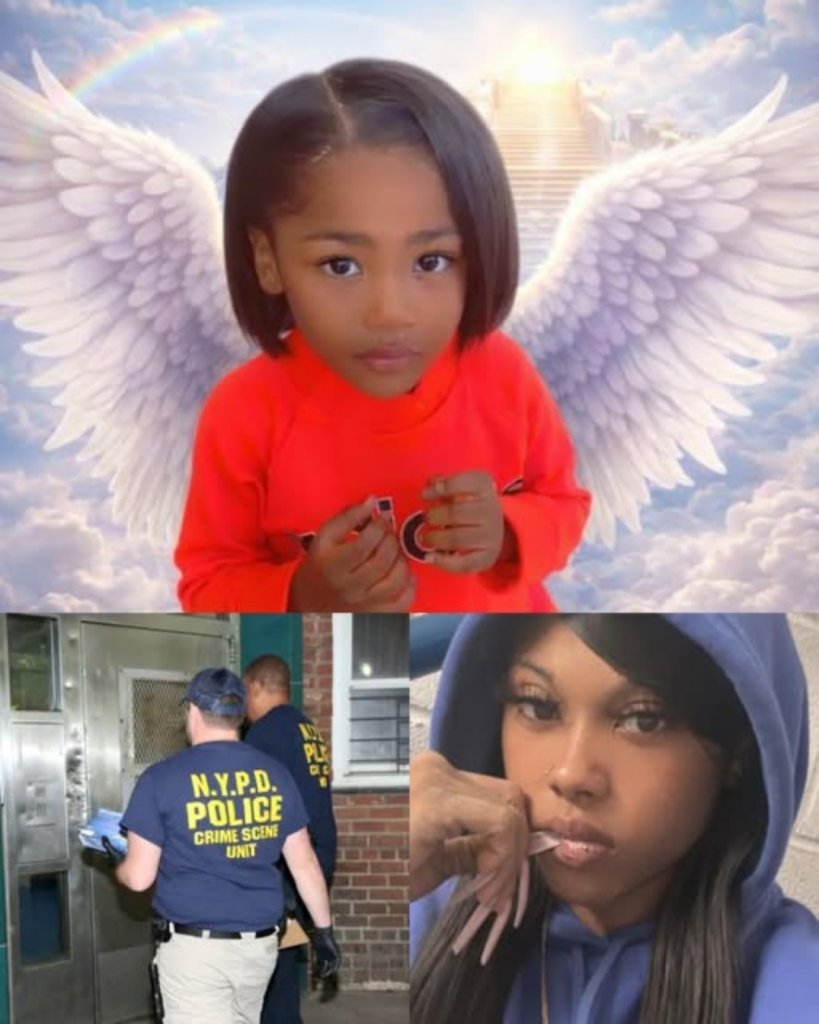
The city that never sleeps fell silent that early morning, a silence shattered only by screams that no neighbor could forget.
At approximately 4:00 a.m. on May 26, 2023, a small Bronx apartment became the scene of an unimaginable tragedy.
Inside, six-year-old Jalayah Eason struggled for her life, the faint echoes of her terror reaching beyond the walls of her home.
But outside, in the streets of her neighborhood, life carried on, unknowing, unaware—or perhaps aware and helpless.

Jalayah’s story is not just one of a little girl’s life cut brutally short.
It is also a story of systemic failures, overlooked warning signs, and the deep moral reckoning that arises when a community, and the systems that claim to protect it, fail a child.
Born into a life that should have been filled with playgrounds, laughter, and bedtime stories, Jalayah instead found herself trapped in a cycle of abuse and neglect.
According to prosecutors and court filings, Jalayah had endured weeks—perhaps months—of extreme mistreatment.
Her mother, Lynija Eason Kumar, was later charged with multiple crimes including second-degree murder and endangering the welfare of a child.

The abuse Jalayah suffered was severe, encompassing blunt-force trauma, malnourishment, and positional asphyxia, ultimately ending her young life far too soon.
The circumstances leading to her death are deeply unsettling.
Court documents reveal that Jalayah was repeatedly beaten with hard objects and, at times, hung by her wrists inside a closet.
These were not isolated incidents but part of a harrowing pattern of abuse that escalated in intensity and cruelty.
Her tiny body bore the marks of pain that no child should ever endure—bruises on her wrists, chest, and torso, all silent testaments to suffering witnessed by few and ignored by too many.
Neighbors recall hearing the screams that fateful night, cries that pierced the early morning hours with an urgency that begged for intervention.
Dennis Rivera, one of the residents in the building, described the sounds he heard around 4:00 a.m. with a mix of horror and lingering regret.
May you like
American War Hero & Coal Miner: The Story of Charles Dennis Buchinsky
A Lifetime of Valor: The Legacy of Colonel Hayden A. Sears
Operation Starlight: The Marines’ First Major Test in Vietnam

“I went outside because I feared something terrible was happening,” he said, speaking later to reporters.
“I should have called sooner. I should have done something.”
The tragedy does not end with Jalayah’s death.
Inside the apartment, police discovered her siblings—ages three and eight at the time—also showing signs of neglect and prior injuries.
The younger children, who had survived in the shadow of constant violence, were swiftly placed into protective custody.
Their removal from the home became a critical intervention, a belated attempt to prevent more tragedy.
Yet for Jalayah, no intervention came in time.
Jalayah’s father, Ronald Branch, faced his own uphill battle to secure recognition and custody of his children.
Court records indicate that he had to fight to establish paternity in order to bury his daughter and later obtained full custody of Jalayah’s older brother.

The fight was not just legal; it was deeply personal, a quest to reclaim a semblance of justice in a world that had failed his family.
The public reaction to Jalayah’s murder was immediate and visceral.
Her death sparked widespread outrage, prompting intense scrutiny of the New York City Administration for Children’s Services (ACS).
Investigations revealed that ACS had previously been aware of the household, having looked into reports of abuse and school absences related to Jalayah’s brother.
The case, however, had been closed months before Jalayah’s death, leaving her unprotected.
The question that reverberated through the city was simple yet profound: How many chances were missed before a six-year-old paid with her life?
How many warning signs went ignored?
And how many opportunities to intervene slipped through the cracks of a system meant to safeguard children?
As the legal process moves forward, Lynija Eason Kumar remains in custody, awaiting trial.

She has pleaded not guilty to all charges, including second-degree murder, first- and second-degree manslaughter, and multiple counts of endangering the welfare of a child.
The courtroom will become a place of confrontation, a space where evidence, testimony, and emotion will collide.
But for those who loved Jalayah, no trial can undo the profound loss they have suffered.
In telling Jalayah’s story, it is impossible to ignore the broader societal implications.
Her death shines a glaring light on the failures of systems designed to protect the most vulnerable.
Records show that interventions were attempted but ultimately insufficient.
Reports of abuse were filed, investigations were conducted, but the closure of prior cases and the absence of follow-up allowed danger to persist.

For Jalayah, these systemic lapses had fatal consequences.
Neighbors, too, are left with a haunting awareness of what they heard, what they witnessed, and what they failed to act upon.
The constant screaming, the pleading for help, the sounds that any adult would recognize as cries for life—these were impossible to ignore.
Yet fear, doubt, or perhaps a sense of helplessness delayed response.
The guilt and regret expressed by those who lived near Jalayah’s home are emblematic of a larger, societal failure to intervene when the signs of abuse are evident.
In communities across the nation, stories like Jalayah’s are tragically familiar.
Children suffer in silence, their pain unnoticed, their pleas unheard.

Yet each case also presents an opportunity for reflection, reform, and action.
Jalayah’s death calls for a renewed commitment to child welfare, not just in words but in systems, practices, and cultural consciousness.
It demands accountability, transparency, and vigilance.
Her siblings, now safe from immediate harm, carry the weight of these events with them.
Their healing process is ongoing, fraught with trauma, fear, and the challenges of rebuilding trust in adults and institutions meant to care for them.
Mental health professionals emphasize that interventions must extend beyond physical safety.

Emotional and psychological care is paramount, particularly when children have been exposed to repeated trauma.
The courtroom, once again, becomes central in this narrative—not as a place to undo tragedy, but to seek justice, accountability, and, ideally, lessons for the future.



The indictment of Jalayah’s mother signals the start of a legal reckoning, one that will examine the decisions, actions, and negligence that culminated in the death of a six-year-old.
The trial promises to bring to light the grim details of abuse, but it also provides a platform for systemic scrutiny.
Yet, for all the legal proceedings, the public outcry, and the media attention, the story of Jalayah Eason remains, at its core, a profoundly human one.
It is about a child who should have been safe.
A child who should have experienced the simple joys of childhood—school, play, birthday parties, bedtime stories whispered in loving voices.
A child whose existence, though brief, demanded protection, love, and care.
In reflecting on her life and death, communities are forced to ask uncomfortable questions:
What more could have been done?

How do we ensure that children like Jalayah are never again left vulnerable?
And how do we, as neighbors, families, and societies, act decisively when a child’s cries echo through the night?
Jalayah’s story is also a reminder that awareness alone is not enough.
Reports to authorities, neighborhood vigilance, and systemic protocols must be coupled with action.
Advocacy, community engagement, and responsive child welfare systems are essential in preventing such tragedies.
Every missed opportunity has real, irreversible consequences, as tragically illustrated in Jalayah’s case.

Her father, Ronald Branch, continues to fight—not only for justice for Jalayah but also for the well-being and safety of her surviving siblings.
His determination, while deeply personal, reflects a universal imperative: the protection of children is a responsibility that transcends family, neighborhood, and bureaucracy.
Each life lost to abuse underscores the urgency of vigilance, intervention, and reform.
As society processes the enormity of Jalayah’s death, her story becomes both a cautionary tale and a call to action.
It is a reminder that every scream, every bruise, every subtle sign of distress in a child’s life demands attention.
It is a reminder that childhood, fleeting and precious, is sacred and must be fiercely protected.
Ultimately, the tragedy of Jalayah Eason is a mirror held up to society, reflecting the costs of inaction and the consequences of systemic failure.
It is a reminder that while laws, procedures, and investigations are necessary, they are insufficient without humanity, vigilance, and courage.
The life of a six-year-old cannot be restored, but her story can ignite change.

Through awareness, advocacy, and reform, perhaps future children will not endure what Jalayah did.
Perhaps neighbors will act immediately.
Perhaps child welfare systems will not overlook signs of abuse.
Perhaps the cycles of neglect, fear, and inaction can be broken.
Jalayah Eason should be alive today.
Her laughter should still echo in her home.
Her presence should still fill the small joys of everyday life—school mornings, afternoon playdates, bedtime stories.
Instead, her story has become a testament to what is lost when protection fails and vigilance falters.
Her death demands remembrance, justice, and reform.

It demands that neighbors, authorities, and society as a whole examine where failures occurred and how they can be prevented in the future.
Jalayah’s life, brief though it was, holds lessons for all—lessons about responsibility, compassion, and the costs of silence.
The six-year-old girl who died while neighbors listened to her screams is not just a statistic.
She is a life that mattered.
A story that must be told.
And a reminder that every child, no matter their circumstances, deserves protection, care, and a chance to grow.
Her voice, tragically silenced, continues to call for justice—not only in her own case but for every child at risk.
Jalayah Eason’s story is a call to action, urging communities and systems to never let such horrors happen again.

Because a six-year-old’s life is too precious, too fragile, and too fleeting to be lost to neglect.
And because the echoes of her cries demand that change finally come.
The Night the Heredia Sank: How an American Family Survived the U-Boat Terror in U.S. Waters
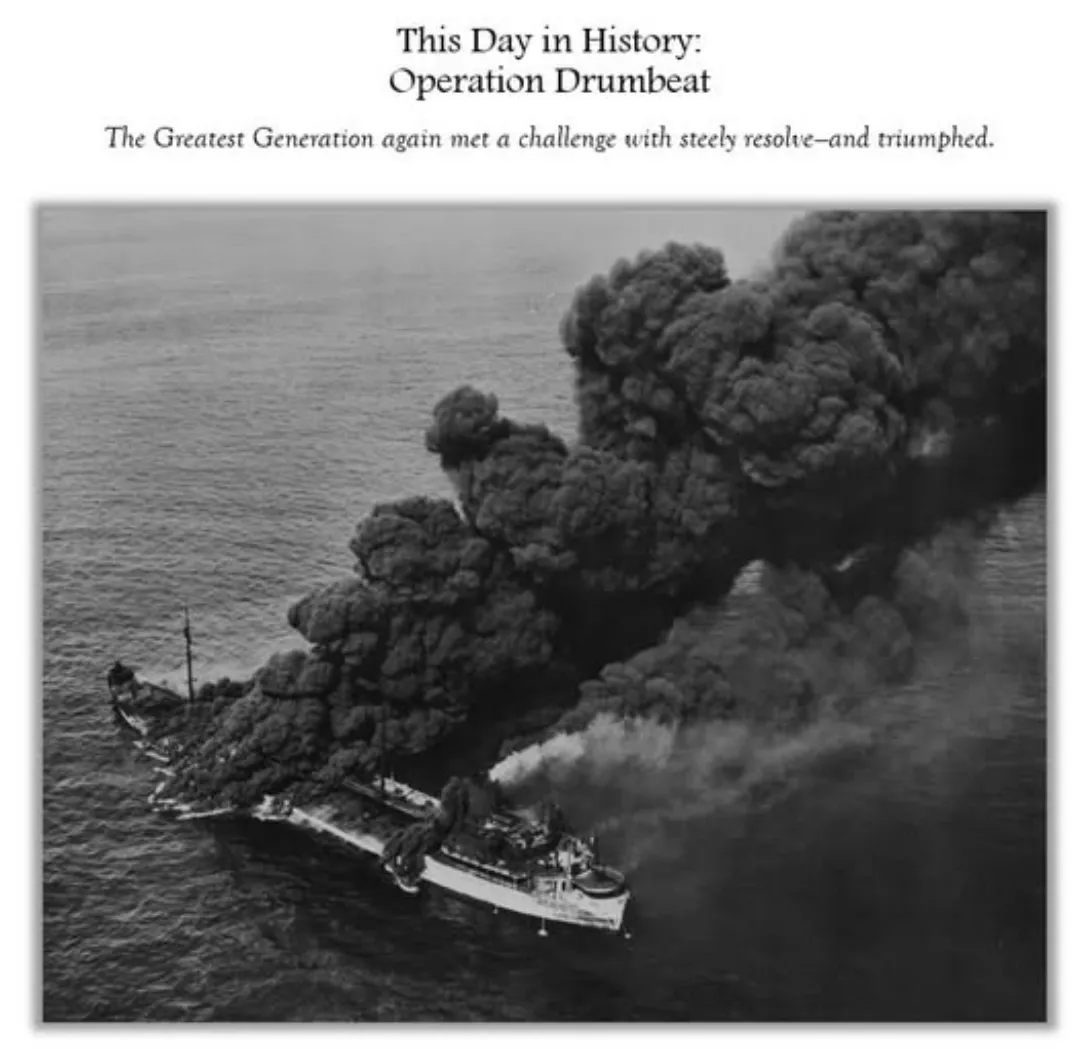
On the night of May 18, 1942, in the dark waters of the Gulf of Mexico, the passenger-cargo ship Heredia was only 40 miles from New Orleans when disaster struck. What was meant to be an ordinary voyage from Guatemala turned into a nightmare of fire, chaos, and survival—one that revealed just how vulnerable America was in the early days of World War II.
Shortly after midnight, a German U-boat lurking beneath the Gulf’s quiet surface fired its torpedoes. The explosion ripped through the Heredia’s hull, sending shockwaves across the decks and throwing sleeping passengers into terror. Within minutes, the ship began to list and sink, taking dozens of lives down with it.
Among the passengers was 8-year-old Raymond “Sonny” Downs Jr. and his family. “The attack woke me,” he would recall years later, “and the next thing my dad was standing there, and he said, ‘Put on your life preserver.’ I looked down on the deck, and he was already standing in water about a calf high.”
As the Heredia went down, panic and confusion reigned. The Downs family—Raymond, his parents, and his little sister—were swept apart in the dark waters, struggling to stay afloat among wreckage, oil, and bodies. Hours later, against all odds, all four were pulled from the sea alive. Their survival was a miracle—but their ordeal was only one of hundreds playing out along America’s coasts that year.
The sinking of the Heredia was part of a larger and often forgotten chapter of the war: the German submarine campaign against U.S. shipping, known as Operation Paukenschlag—Operation Drumbeat. It began in early 1942, when German U-boats prowled the East Coast and Gulf of Mexico, sinking merchant ships almost at will.
America, newly thrust into the global conflict after Pearl Harbor, was woefully unprepared. Merchant ships still sailed alone, easy prey for lurking submarines. Coastal cities refused to dim their lights, their glowing skylines outlining ships like targets on a firing range. German commanders were stunned at their good fortune.
“We had left a blacked-out Europe behind us,” one German officer wrote. “Yet here, the buoys were blinking, the lighthouses shining, and the roads along the coast glittered with headlights. Before this sea of light, against this glare, the ships were presented to us like silhouettes in a sales catalogue. All we had to do was press the button.”
And they did—again and again. In the first five months of 1942 alone, nearly 130 ships were sunk off American shores. U-boats attacked within sight of vacationers on the beaches of Florida and the Carolinas. Oil slicks washed ashore. Survivors were brought in by fishermen. The war had come to the home front in a way few Americans could have imagined.
Newspapers began to take note. “Another vessel is torpedoed in the Gulf of Mexico not far from New Orleans,” one Wisconsin journalist reported on May 22, 1942. “I think this makes six such victims in about the same spot. . . . It isn’t hard to understand why people on the south and east coasts ‘feel’ the war more than we do in the middle west.”
The U-boat attacks were a national wake-up call. Despite warnings from British intelligence months earlier, the U.S. Navy had underestimated the danger. “My Navy has been definitely slack in preparing for this submarine war off our coast,” President Franklin D. Roosevelt admitted to Winston Churchill.
But America adapted quickly. Convoy systems were introduced, ensuring merchant ships traveled together under protection. Antisubmarine patrols began to fly along the coastline. Shipyards went into overdrive, producing destroyers, corvettes, and escort carriers at an astonishing pace. Coastal cities were ordered to black out their lights.
By mid-summer 1942, the tide began to turn. The U-boats’ “Happy Time” off American shores was over. The hunters became the hunted. More German submarines were destroyed, and the once-vulnerable shipping lanes grew safer.
For the survivors of Heredia, the memory of that night never faded. Raymond “Sonny” Downs Jr. lived to tell his story decades later, one of the few children to survive a wartime sinking so close to home. His family’s ordeal stands as a reminder that the war’s front lines were not confined to Europe or the Pacific—they reached right to America’s doorstep.
The Gulf waters that claimed the Heredia were also the proving ground for a generation learning, under fire, how to defend itself. The bravery of merchant mariners, the sacrifice of those lost at sea, and the swift adaptation of the Navy all marked a turning point in the war effort.
Eighty-three years later, the story of the Heredia still echoes—an ordinary voyage turned into tragedy and survival, a reminder of the moment when America learned that even its own shores were not immune to the reach of war.
That night in May 1942, a young boy named Sonny clung to life in the dark Gulf, his small hands gripping a lifeboat rope as explosions faded into silence. By dawn, he was one of the few left alive to tell the story—proof that even amid fear and fire, courage and fate could still prevail.Continue reading
He Went Up the Mountain Before Dawn and Never Came Back.
Dawn came slowly to the high country that Friday, the kind of pale winter light that makes the m…A Mother, a Prophecy, and a List That Ended Two Lives.Lori was the kind of mother people pointed to in the church parking lot, the kind whose laughter sou…She Was a Domestic Violence Counselor and a New Mother in Pain—Until the Night She Crossed the Guardrail at Niagara Falls With Her Two Children.The spray at Niagara Falls always looked like breath from something alive.A white, constant exhale t…A Quiet Georgia Town, a 911 Call, and the Teen Girl Accused of Killing Her Parents as They Slept.The quiet rural calm of Tyus, Georgia, was torn apart by a crime so disturbing that even seasoned in…A Routine Call on a Quiet Summer Night Ended the Life of 26-Year-Old Officer Mohamed Said in Melvindale.The summer night of July 21, 2024, settled gently over the city of Melvindale, Michigan.The air was…
Powered by Metaconex


Leave a Reply