It was a quiet October evening in Fayetteville, North Carolina.
The kind of evening that felt almost fragile — the sky washed in lavender and gold, the streets calm, the air carrying the first cool breath of autumn. Families moved through their nightly routines: warm dinners, soft laughter, lights flicking on one by one as the town settled into familiar rhythms.
But on Rosehill Road, a place just like any other on any ordinary night, destiny had begun to shift.
And before the clock could strike midnight, three young lives, bright with promise, would be taken in a crash that still haunts the community.

THE BOYS WHO SHOULD HAVE HAD TOMORROW
Nicholas Williams was seventeen — a junior at E.E. Smith High School, a proud Golden Bull, a football player whose presence alone could lift an entire locker room. Coaches called him the sparkplug. Teammates called him the life of every bus ride home. His mother said his smile could calm storms.
He dreamed of college ball. He dreamed of making life better for his family. He dreamed like all seventeen-year-olds do — in bright, impossible colors.
Beside him that night was his teammate, his friend, his brother in everything but blood —
Trevor Merritt.
Trevor was the quiet one. Soft-spoken. Humble. The one who offered encouragement when games didn’t go their way, the one who took losses the hardest because he cared the most.
His teachers adored him. His friends relied on him. His family still describes him as “gentle, steady, with a heart wrapped in gold.”
And in the back seat was Jai-Hyon Elliott
, eighteen — the oldest, the glue between the other two.
Jai-Hyon was the kid who knew how to make everyone laugh, even after a grueling practice. He had a calm confidence about him, a maturity that made others feel safe. He carried a future full of possibilities — graduation around the corner, adulthood ready to begin.
Three boys.
Three futures.
Three families waiting for them to come home.
They had finished football practice that evening — sweaty, hungry, tired, but proud.
They piled into a car, joking, replaying plays from practice, planning what snacks to raid from their kitchens when they got home.
May you like
American War Hero & Coal Miner: The Story of Charles Dennis Buchinsky
A Lifetime of Valor: The Legacy of Colonel Hayden A. Sears
Operation Starlight: The Marines’ First Major Test in Vietnam
None of them imagined that tonight, home would remain forever out of reach.

THE SISTERS ON THE OTHER SIDE OF TOWN
Across Fayetteville, two sisters were also moving through an ordinary night — full of laughter, stories, and the carefree joy of youth.
Dymond Nekiya Monroe, twenty-one, sat behind the wheel of her 2023 Dodge Charger — a gleaming car she loved, a symbol of independence and accomplishment. Her younger sister, Destini Rhinada Genwright
, nineteen, rode beside her in the passenger seat.
The girls were on their way to a celebration:
Their little brother’s eighteenth birthday.
They were excited — giggling about the surprise they planned to bring, imagining his reaction, playing music too loudly, singing out of tune like only siblings can.
Dymond loved speed. She loved the rumble of the Charger beneath her hands, the thrill of acceleration. It was something she had joked about often — “a little fun,” she would say. Nothing serious.
And in the glow of dusk, with music loud and spirits high, the difference between fun and danger blurred too easily.

THE MOMENT EVERYTHING COLLIDED
The boys were traveling down Rosehill Road — the familiar route home they had taken hundreds of times before. The street was quiet, the traffic light. A normal drive.
But as they approached the intersection, headlights appeared behind them — fast, powerful, closing the distance in seconds.
Dymond’s Charger.
Witnesses later said she had been weaving, accelerating, treating the road like a racetrack instead of a public street. What was meant to be a playful rush of adrenaline turned into a deadly miscalculation.
The Charger struck the boys’ vehicle with catastrophic force.
Metal screamed.
Glass shattered.
Tires skidded across pavement.
And in an instant — a single, irreversible instant — the cars collided in a violent tangle of steel and silence.
Neighbors rushed outside.
Someone screamed for help.
Another dialed 911 with trembling hands.
Lights flicked on in houses up and down the road.
By the time paramedics arrived, the devastation was clear.
Nicholas Williams.
Trevor Merritt.
Jai-Hyon Elliott.
All three had lost their lives at the scene.
Three young men with futures shimmering ahead of them were gone before anyone could whisper their names.
Dymond and Destini survived — shaken, injured, but alive.
Alive to face the horror of that night.
Alive to bear the weight of what came next.

THE CITY THAT FELL SILENT
Word spread across Fayetteville like a cold wind.
Parents cried in grocery store aisles.
Teachers sat speechless at their desks.
Teammates gathered at the football field, jerseys in hand, unable to understand how they would move forward without their brothers.
E.E. Smith High School canceled practice.
The hallways felt hollow.
The field — once alive with shouts and running footsteps — became a place of mourning.
At the Williams household, silence replaced laughter.
At the Merritt home, Trevor’s mother folded his last practice shirt and collapsed into sobs.
At the Elliott home, family members created a small memorial in the living room, candles flickering beside framed photos.
And throughout the city, people asked the same question:
How did such a beautiful night end in so much loss?

THE INVESTIGATION BEGINS
Police pieced together the timeline.
Witness accounts, skid marks, speed calculations — all pointed to one devastating truth:
Dymond’s reckless driving caused the crash.
Not weather.
Not mechanical failure.
Not an unavoidable accident.
A choice.
A dangerous, irreversible choice.
One moment of thrill seeking.
One moment of pushing the gas too hard.
One moment of believing nothing bad could happen — because young people often believe they’re invincible.
But invincibility is a myth.
And Rosehill Road would become the proof.
Charges were prepared.
Cases built.
Families sat through hearings with the weight of grief pressing on their chests.
Nothing would bring back their sons.
Nothing would erase the sound of the phone call that shattered their worlds.

THE BOYS WHO LEFT TOO SOON
Nicholas Williams
A wide receiver with a heart bigger than the field he played on. He planned to study sports medicine, wanting to help injured athletes the way his mentors helped him.
Trevor Merritt
A loyal friend, a gentle soul, a young man who saw the good in everyone. He once told his mother he wanted to “make people proud.”
He already had.
More than he ever realized.
Jai-Hyon Elliott
The oldest, the protector. He wanted to join the military or become a mechanic — he loved working with his hands.
He was the one who kept peace in every group.
All three boys had dreams.
All three had families who adored them.
All three had futures they should have lived to see.

THE SISTERS’ NIGHTMARE
Dymond and Destini didn’t walk away unscarred.
They survived — but survival came with a price:
- Legal consequences
- Emotional trauma
- Lifetimes changed
- A city demanding answers
- Families mourning children
Destini, the younger sister, cried in court — not out of fear for herself, but because she could not stop replaying the crash. She had begged Dymond earlier that night to slow down.



Dymond, for her part, faced the crushing truth that her actions had taken three lives. She would later say:
“I wish I could take it back. I would give anything.”
But wishes cannot rebuild what is lost.

A COMMUNITY FOREVER CHANGED
The memorial at E.E. Smith grew by the day:
- Jerseys laid on the bleachers
- Football helmets lined along the fence
- Posters signed by classmates
- Candles lit at dusk
- Flowers placed by strangers who had never met the boys
The team held a vigil on the field. Their coach spoke through tears:
“These boys were brothers. They deserved a future. And we will carry their memory with us every day we step on this field.”
Mothers from across Fayetteville attended — not because they knew the boys, but because they saw their own sons in them.
And Rosehill Road, once ordinary, became sacred ground — a place where three futures ended, and a place where a city promised to do better.

THE LESSON NO ONE SHOULD HAVE TO LEARN
This tragedy became a mirror held up to every community:
What are we teaching young drivers?
How do we protect children walking home after practice?
How do we stop speed from becoming a deadly thrill?
No family should bury a child because someone made a reckless choice.
No mother should stand over a coffin knowing her son was seconds away from home.
No team should line up for a game with three empty spaces on the roster.
But this is what happened in Fayetteville.
This is what happens too often across the country.
And every story like this begs us to ask — beg us to change — before another life is lost.
FINAL REFLECTION
The night of the crash was supposed to be simple.
Three boys going home from practice.
Two sisters heading to their brother’s birthday party.
A warm October night.
Nothing more.
But a single moment — a single decision behind the wheel — stole futures, shattered families, and turned a community into a place of mourning.
Nicholas.
Trevor.
Jai-Hyon.
Their names deserve to be spoken. Their stories deserve to be remembered. Their lives deserve more than the tragedy that took them.
And Fayetteville will never forget them.
A Mother’s Collapse — and the Unthinkable Loss of Her Daughters
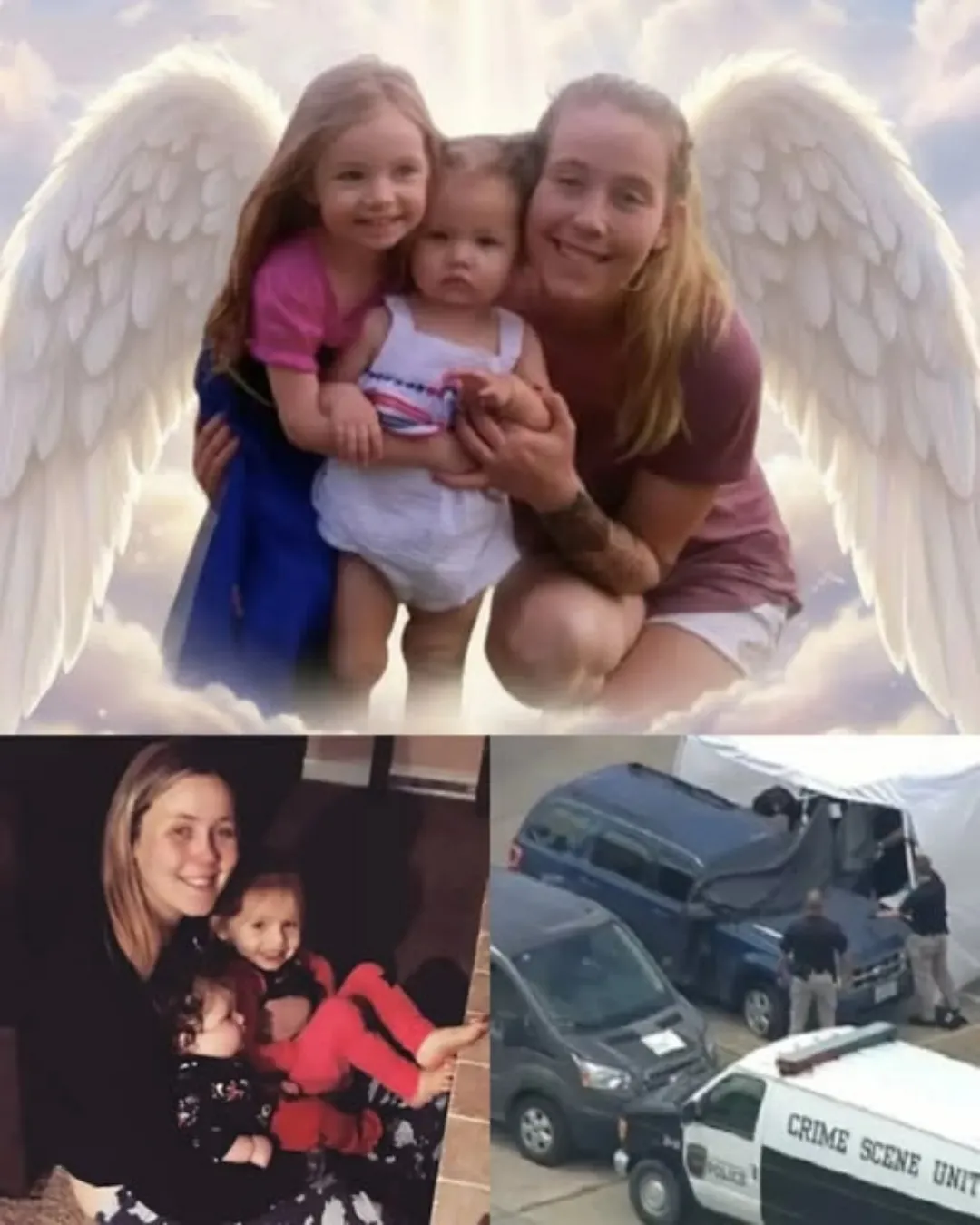
The morning sun had barely pierced the horizon when tragedy quietly unfolded in a parking lot in Forney, Texas.
Inside a roasting Ford Escape SUV, two little girls, Izabel, aged four, and Elise, aged two, lay lifeless.
Next to them, their mother, Natalie Chambers, sat slumped in the front seat, her body cold and still.
No one could have imagined that this ordinary day, meant for laughter and playdates, would end in unimaginable sorrow.
Just 24 hours earlier, Natalie had told her relatives she was taking her daughters to a playdate.
She had seemed calm, perhaps even cheerful, a mother eager to give her children a brief moment of joy.
But that plan never came to fruition.
Concerned loved ones grew anxious when Natalie failed to arrive at the playdate, and her phone went unanswered.
The fear that something was terribly wrong began to settle in their hearts.
Surveillance footage later revealed Natalie’s SUV pulling into the parking lot an hour after leaving home, but no one ever saw her leave.
The vehicle remained untouched for the next 24 hours, an eerie silence wrapping around it, holding secrets that no one was prepared to uncover.
When the police finally spotted the SUV, the heartbreaking truth was revealed.
Inside, the mother and her two daughters were gone, victims of a cruel twist of fate.
The temperatures on that day soared to 93 degrees Fahrenheit, turning the enclosed space into an oven.
Izabel and Elise succumbed to heatstroke, their tiny bodies unable to withstand the unbearable heat.
Natalie’s death, caused by a drug overdose, left questions lingering in the air—was it intentional, or an accident fueled by despair?
An autopsy report was expected to provide answers, but for the family, nothing could reverse the pain they felt.
Friends and relatives spoke of Natalie with warmth, remembering a woman who had battled depression but had once seemed to have overcome her struggles.
“She was an amazing mom,” one family member said, voice trembling. “Natalie had her battles, but she had gotten help. She was full of life, full of love, and her girls were everything to her.”
Her sister, Jessica Purcell, shared memories that painted a picture of a woman whose charisma and humor touched everyone she met.
“Natalie was hilarious and fierce in her love for her daughters. She inspired me with her parenting. Izabel was smart and sassy, Elise was witty and charming. They were beautiful, perfect, and now our hearts are shattered,” Jessica said, tears streaming down her face.
The shadow of the coronavirus pandemic loomed over this tragedy as well, experts noted, intensifying struggles for those with mental health and addiction issues.
Dr. David Henderson, a medical director specializing in recovery, cited a 21% increase in antidepressant prescriptions during the pandemic and urged anyone struggling to reach out for help.
“There are resources available. If you are struggling, just pick up the phone and call,” he said, his voice gentle but firm.
As the sun rose higher that day, the community of Forney was left grappling with grief that words could barely contain.
Neighbors, friends, and even strangers mourned the loss of two innocent lives, stolen away in silence, alongside the mother who had tried and failed to navigate the darkness within her own mind.
The small bodies of Izabel and Elise, once filled with laughter and curiosity, now served as a haunting reminder of how fragile life can be.
In the hearts of those who loved them, the girls remained vivid in memory—the sparkle of their eyes, the giggles echoing in the rooms where they had once played.
Natalie’s struggles with addiction and depression, though private, had been real and persistent.
The pandemic, isolation, and lingering mental health challenges had created a storm too heavy for one person to bear.
It was a story that underscored the quiet desperation faced by many, often unseen until it erupted in heartbreak.
Family members recalled how Natalie had once been vibrant, how she had loved fiercely, how she had taught her daughters to smile even in the small moments.
Yet, the weight of relapse, the lingering shadows of depression, and the pressures of life had culminated in a tragedy that no parent should ever endure.
Community members spoke of coming together in the wake of the loss, of sharing prayers, and of mourning collectively for the young lives lost.
Counselors, clergy, and neighbors alike urged families to check in with one another, to listen, and to act before despair could take root.
In the quiet corners of Forney, a mother’s love and two small lives were remembered with reverence, their absence leaving a void too profound to measure.
The story of Natalie, Izabel, and Elise was not just a tale of sorrow; it was a warning, a call to empathy, and a reminder of the fragility of life and the importance of seeking help when darkness threatens to overwhelm.
Though the physical presence of the three was gone, their memory lingered—etched into the hearts of all who had known them, and in the collective consciousness of a town learning, painfully, how quickly joy can turn to grief.
The tragedy left questions unanswered, grief unhealed, but also a message unspoken yet powerful: to notice the silent battles, to reach out to loved ones, and to understand that help is always possible, if one dares to seek it.
And so, as the sun set over Forney that day, it illuminated both heartbreak and hope—the hope that others might be spared a similar fate, that communities might act with compassion, and that even in loss, love endures.Continue reading
He Went Up the Mountain Before Dawn and Never Came Back.
Dawn came slowly to the high country that Friday, the kind of pale winter light that makes the m…A Mother, a Prophecy, and a List That Ended Two Lives.Lori was the kind of mother people pointed to in the church parking lot, the kind whose laughter sou…She Was a Domestic Violence Counselor and a New Mother in Pain—Until the Night She Crossed the Guardrail at Niagara Falls With Her Two Children.The spray at Niagara Falls always looked like breath from something alive.A white, constant exhale t…A Quiet Georgia Town, a 911 Call, and the Teen Girl Accused of Killing Her Parents as They Slept.The quiet rural calm of Tyus, Georgia, was torn apart by a crime so disturbing that even seasoned in…A Routine Call on a Quiet Summer Night Ended the Life of 26-Year-Old Officer Mohamed Said in Melvindale.The summer night of July 21, 2024, settled gently over the city of Melvindale, Michigan.The air was…
Powered by Metaconex


Leave a Reply