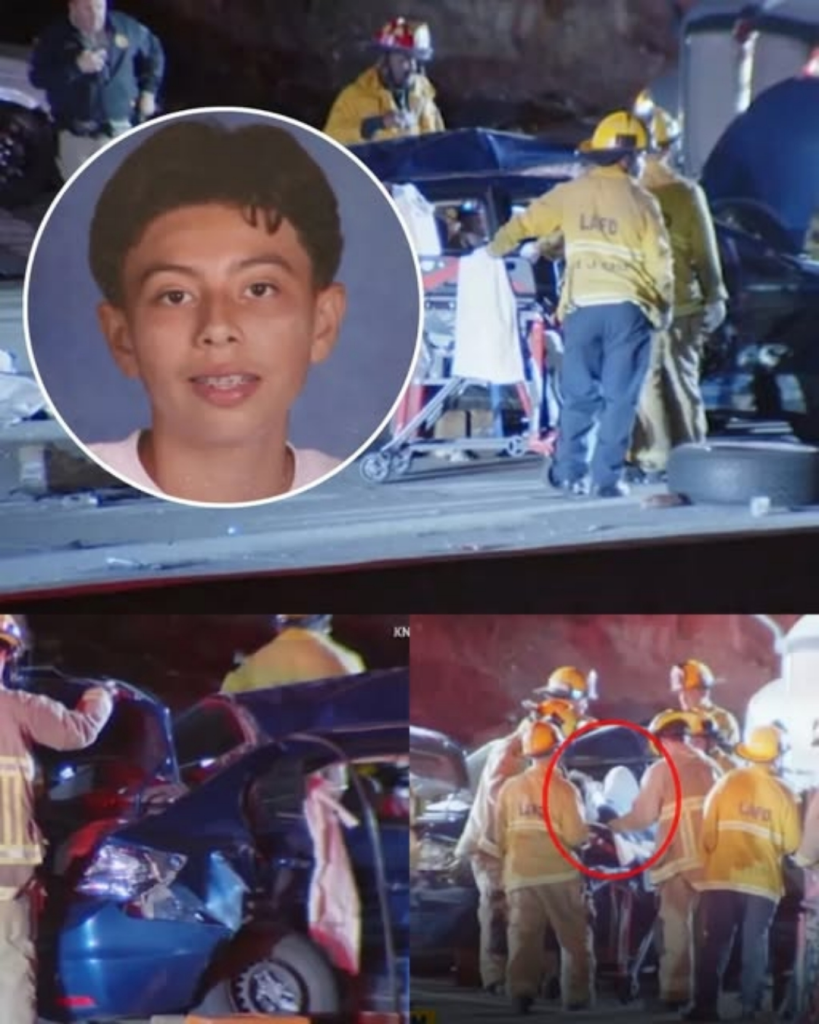
The holiday season in Sylmar, Los Angeles, was meant to be filled with joy, shopping trips, and family gatherings.
Streets were lined with twinkling lights, and the spirit of Christmas seemed to hang in the air like soft snow — even in the sun-soaked city. But for the Siordia and Ceja families, that warmth was shattered in an instant.
On a Sunday afternoon, December 2025, a routine Christmas shopping trip ended in unthinkable tragedy.
Thirteen-year-old Bryan Ceja, full of energy, curiosity, and an unmistakable love for sports, was killed in a
multi-vehicle crash on the 210 Freeway, a collision that closed the freeway for hours and left multiple families reeling.
Bryan’s stepfather, Alfredo Siordia, spoke about the heartbreak with a voice thick with grief. “An amazing kid. I’m the luckiest stepfather ever to have him in my life,” he said.
The words were simple, yet heavy — the weight of loss palpable in the quiet pauses between sentences.

The Boy Behind the Tragedy
Bryan Ceja was more than just a number in a police report. He was a
vibrant, athletic teenager, whose energy lit up every room he entered. Friends and family remember him as playful, curious, and always ready for a game of baseball, football, or anything that challenged his boundless energy.
“He was just this energetic kid, and wanted to play sports. That was mostly his thing,” Siordia explained, recalling the countless afternoons spent cheering Bryan on from the sidelines, whether in football scrimmages or weekend baseball games. “Sorry, baseball, football, you name it. He was just very athletic.”
His love for activity was matched only by his warmth and kindness.
Those who knew Bryan described him as a teenager who could brighten a room with a smile, a boy whose laughter was infectious, and whose presence demanded attention not for mischief, but for the warmth he brought to family and friends alike.
For Siordia, the stepfather who had entered Bryan’s life years earlier, the bond was unbreakable. He recalls how, despite the typical challenges of blending families, Bryan taught him lessons of love, patience, and joy.
May you like
American War Hero & Coal Miner: The Story of Charles Dennis Buchinsky
A Lifetime of Valor: The Legacy of Colonel Hayden A. Sears
Operation Starlight: The Marines’ First Major Test in Vietnam
“For him being a little kid, he taught me how to love as well, and just like, I really miss him,” Siordia said.

The Day That Changed Everything
On that fateful Sunday, Bryan and his mother were out Christmas shopping. The mood was one of excitement and anticipation — the final touches before the holidays.
Gifts were selected, lists were checked twice, and the pair likely shared laughter over candies and trinkets along the way.
But on the 210 Freeway, a routine drive turned into
a scene of chaos and horror. Multiple vehicles collided in what authorities later described as a violent chain-reaction crash.
Emergency services were called immediately, and first responders rushed to the scene.
For the Siordia family, the day that had begun with anticipation and joy ended in devastation.
Bryan did not survive the crash. His mother, severely injured, was transported to a nearby hospital, where she began a long road to recovery.
Miraculously, she survived, but the emotional scars and trauma from witnessing her son’s death are immeasurable.

The Aftermath: Grief and Healing
In the days following the accident, the community of Sylmar rallied around the family. Friends, neighbors, and schoolmates offered support, prayers, and gestures of kindness, but none could bridge the gap left by Bryan’s absence.
For Alfredo Siordia, the grieving process was deeply personal, yet public in a way he hadn’t anticipated. Every conversation, every memory recounted to reporters or friends, became a testament to the life of a boy gone too soon.
“I go inside his room and, you know, picture the times he was there, and it’s just not going to be the same,” Siordia admitted.
The bedroom, once alive with the sounds of a young teenager — laughter, music, the shuffle of sports gear — now stands as a silent monument to memory.
Grief, Siordia notes, is not linear. It is a cycle of memories, reminders, and raw emotions that surface at the least expected moments: a stray baseball rolling across a driveway, the sight of a football helmet, or even the simple act of setting the table for Christmas dinner.

A Community in Mourning
While the Siordia family bore the personal grief, the accident reverberated across Sylmar. Highway closures on the 210 Freeway affected countless drivers, but beyond the inconvenience, the tragedy became a
symbol of fragility in everyday life.
Local schools held moments of silence. Teachers spoke to students about safety, the unpredictability of life, and the importance of cherishing loved ones.
Church congregations offered collective prayers, lighting candles for Bryan and others injured in the crash. Social media feeds overflowed with messages of condolence, remembering a life cut short and a community united in sorrow.

The Father-Stepfather Bond
Alfredo Siordia’s role as stepfather was not just about guidance or discipline. It was about shared experiences, mentorship, and mutual respect.
Despite the legal distinctions of family, Siordia speaks of Bryan as a son, a friend, and a companion through life’s small and significant moments. From simple breakfasts to weekend sports games, their relationship was rooted in genuine love and understanding.
“He was just an amazing kid, and he brought joy into our home,” Siordia said. “It’s a void I don’t think can ever be filled, but I carry him with me in every decision, every thought, every day.”
In the wake of such sudden loss, Siordia also underscores the fragility of life and the importance of cherishing time with loved ones. Each moment — a hug, a conversation, a shared laugh — becomes infinitely more precious when the future is uncertain.

Remembering Bryan: Legacy Beyond Tragedy
Though his life was brief, Bryan left an indelible mark on everyone who knew him. Friends remember his sense of humor, his athletic prowess, and the way he could rally teammates or classmates with a single word of encouragement.
Teachers recall a student attentive and engaged, with a spark of curiosity that extended beyond the classroom. For family members, Bryan represented the very essence of joy, energy, and love.
In memory of Bryan, community members have suggested establishing scholarships, sports programs, or memorial events that honor his life.
Each act of remembrance is not only a tribute to him but also a testament to the collective healing of those affected by the crash.
The Accident and Safety Conversations
While grief remains the central focus, the crash also sparked broader conversations about road safety, highway conditions, and driver awareness. Multi-vehicle collisions, particularly during busy holiday weekends, underscore the fragility of life on the road.
Authorities have urged drivers to exercise caution, reduce distractions, and maintain safe speeds, especially in congested areas.
The Sylmar crash, with its devastating consequences, serves as a cautionary tale for the entire Los Angeles area. Though nothing can reverse the tragedy, the hope is that lessons learned can prevent similar losses in the future.
Coping, Healing, and Moving Forward
The Siordia and Ceja families have leaned on faith, counseling, and community support as they navigate the impossible task of mourning a child.
While grief is ongoing, there are moments of comfort, such as sharing memories, recounting stories of Bryan’s accomplishments, and celebrating the life he lived, however brief.
Siordia has also emphasized the importance of holding onto love in the face of loss. “He taught me how to love,” he said. “I carry that with me, and I will keep his memory alive in everything I do.”
As the holiday season approaches, the pain is undeniably sharper, but it is also tempered with gratitude for having known such a remarkable young boy.
The balance of sorrow and remembrance forms a delicate tapestry of love and loss, one that will endure for years to come.
A Call to Cherish Life
Bryan Ceja’s story is, at its core, a reminder of life’s fragility and the enduring power of love.
In a world often taken for granted, the events on the 210 Freeway illustrate how quickly circumstances can change, how precious each moment truly is, and how a single life can leave a lasting impact.
From his athletic feats to the warmth he shared with family and friends, Bryan’s legacy continues.
Though he is no longer present physically, his spirit and influence remain, a guiding force for those who loved him and for the Sylmar community.
Moving Forward, Together
The road to healing is long and uneven. Yet in every conversation, every tear, and every memory, Bryan’s life inspires action, reflection, and connection.
Family members are committed to honoring him, friends are motivated to cherish every moment, and the community is reminded to protect the most vulnerable among us — especially children.
Through tragedy, Sylmar has been forced to confront the intertwined realities of life, loss, and love.
And while nothing can replace the young boy whose energy once filled rooms and fields, his presence endures in every memory and story shared.
Bryan Ceja may have been only 13, but the life he lived, the love he gave, and the joy he brought continue to resonate, shaping a community forever changed by loss and strengthened by remembrance.
“She Asked for a Mother. She Found a Monster.”
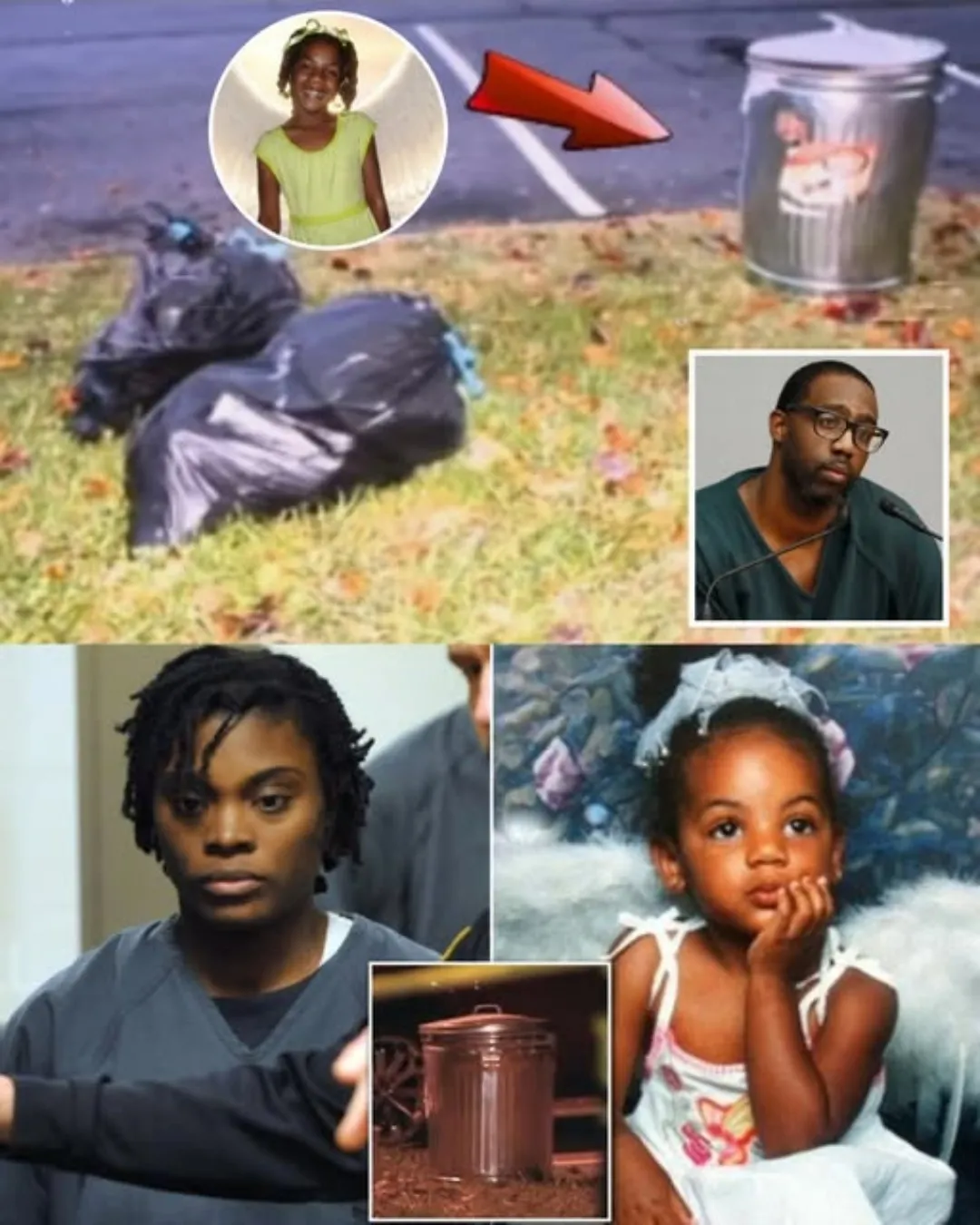
Every Sunday, Emani ran through the church halls like she belonged to every inch of them.
Her sneakers slapped against the polished floor, her laughter ricocheted off the walls, and for a few minutes at a time, she looked like the kind of child the world protects without being asked.
She was six years old.
Bright.
Fearless in the way children can be when they still believe adults are safe by default.
But there was a hollow place inside her that the hymns and handshakes couldn’t reach.
She’d never known her biological mother.
Never felt that particular kind of warmth that says: you don’t have to earn love here.
So Emani looked for it everywhere.
In the older women who hugged her a little longer.
In the teachers who smiled when she answered questions.
In the church ladies who said, “Baby, you are so grown,” and meant it as a compliment.
Children like Emani don’t just want attention.
They want belonging.
They want the kind of love that feels like a home you can carry inside your chest.
And that’s why the woman in the parking lot felt like an answered prayer.
Her name was Tiffany.
A preschool teacher.
Soft voice, practiced smile, the kind of patient eyes people trust without thinking.
She crouched to Emani’s height like she’d done it a thousand times.
She asked her questions and listened to the answers.
She laughed at Emani’s little jokes like they mattered.
To a six-year-old who had spent her whole life wishing for a mother, Tiffany didn’t look like a stranger.
She looked like a story finally turning in the right direction.
She looked like a “before” transforming into an “after.”



Tiffany kept showing up.
Not suddenly, not dramatically—just consistently, which is how trust is built.
She waved from across the lot, brought small treats, remembered Emani’s favorite colors, said things like, “I’ll always be here,” the way adults sometimes say without realizing children keep every promise like a treasure.
And in church, where people believe they are surrounded by goodness, Tiffany’s kindness didn’t raise alarms.
It lowered them.
Because we’re taught monsters come with warning signs.
With snarls.
With obvious cruelty.
But the most dangerous people don’t arrive as villains.
They arrive as helpers.
Within two years, Tiffany married Emani’s father.
There were smiles in the photos, congratulations from friends, a sense that Emani’s life had finally been patched where it had always been torn.
A little girl who had longed for a mother now had one standing right beside her, hand resting on her shoulder like a promise.
For a while, Emani tried to believe the dream was real.
She tried to be the easiest child to love, the kind that doesn’t ask for too much, the kind that earns affection by staying small and agreeable.
She said “yes ma’am,” cleaned up without being asked, and tried to make Tiffany proud.
Because children think love is something you can win if you behave correctly.
And if you lose it, they assume it’s because they did something wrong.
At first, the changes were subtle.
The way Tiffany’s smile would vanish when no one else was looking.
The way her voice sharpened at home, then softened again in public like nothing had happened.
The way Emani learned to read footsteps the way other kids read cartoons—fast steps meant danger, slow steps meant you could breathe.
Emani began to shrink.
Not in height.
In spirit.
Her laughter became quieter.
Her eyes began to flicker toward adults before she answered questions, as if she needed permission to speak.
And when she did speak, she sounded careful, like she was walking across thin ice.
Teachers started noticing things that didn’t match the child they remembered.
The way she flinched when someone reached too quickly.
The way she guarded food.
The way she wore long sleeves even when it was warm, pulling cuffs down like she was hiding something.
But noticing is not the same as acting.
Not when you don’t want to believe what you’re seeing.
Not when it’s easier to call it “a phase” than to imagine a child being harmed behind closed doors.
At home, Tiffany’s control tightened like a knot.
Rules multiplied.
Punishments became unpredictable.
Emani could do everything right and still be wrong, which is how you break a child without leaving a mark anyone can easily name.
She learned that “sorry” didn’t always fix it.
That tears could make it worse.
That silence was sometimes safer than truth.
Her father saw some of it.
Of course he did.
But seeing something and admitting it are different things.
Admitting it means facing what kind of person you brought into your child’s life.
Admitting it means choosing your child over your pride, your marriage, your comfort, your image.
And many adults, tragically, choose what feels easier in the moment.
They choose denial because denial asks nothing of them.
By 2010, the signs were harder to ignore.
By 2012, Emani began running away.
Not once, not twice—enough times that the pattern should have screamed.
A child does not flee home for fun.
A child runs because home has become the place they are most afraid to be.
Every time she ran, it was a confession without words.
Every time she ran, she was saying: please, somebody notice.
Every time she ran, she was hoping the world would be braver than the people inside her house.
But the world has a way of returning children to the very places they’re trying to escape.
Because paperwork gets filed.
Because adults sound convincing.
Because the system often believes guardians before it believes a scared little girl.
Tiffany could perform kindness when she needed to.
She could cry at the right moments.
She could say, “She’s troubled,” “She’s lying,” “She has behavior issues,” and people would nod because it fit a story they preferred—one where the adult is rational and the child is the problem.
And Emani, meanwhile, was learning the cruelest lesson:
that telling the truth doesn’t always save you.
By 2013, Emani vanished from public view entirely.
No more running through church halls.
No more school sightings.
No more casual “How’s Emani doing?” with a bright answer.
Just… gone.
When a child disappears quietly, it’s not the kind of disappearance that triggers amber alerts and news helicopters.
It’s the kind that happens in slow motion.
One missed day becomes two.
Two becomes a week.
And before anyone is forced to say the terrifying words out loud, months have already passed.
People assumed she had moved.
That her father changed jobs.
That she was with relatives.
That it was none of their business.
And the ones who felt a prickle of worry let it fade, because worry without action is easier to live with than the guilt of confronting something and being wrong.
But eventually, questions caught up.
They always do.
A child can’t vanish forever without leaving a hole somewhere in a system—attendance records, medical visits, paperwork trails that don’t line up the way they should.
And when authorities finally looked closely, the story the adults offered didn’t hold.
There were contradictions.
Missing records.
Answers that shifted depending on who asked.
And when investigators pushed harder, the truth began to surface in fragments—each one more horrifying than the last.
What had been happening behind those doors was not strict parenting.
Not discipline.
Not “a troubled child acting out.”
It was cruelty that had been allowed to grow unchecked, protected by silence and the convenient belief that families should be left alone.
When authorities finally discovered what Emani endured, it wasn’t one single moment of harm that shocked people most.
It was the length of it.
The years.
Because that’s the part the public struggles to accept:
that suffering doesn’t always announce itself.
Sometimes it hides inside a routine.
Inside a marriage.
Inside a home that looks fine from the street.
And then came the question that split the community in two.
What did Emani’s father do when he finally realized his daughter wasn’t safe?
What choice did he make when denial stopped working and reality demanded action?
Some people want to imagine he fought.
That he grabbed his child and ran.
That he became the hero of the story at the last second.
But stories like this rarely give clean heroes.
They give complicated adults and irreversible consequences.
They give choices that come too late, and a child who pays for every delay.
By the time the truth was undeniable, the damage was already done.
And no apology—no matter how sincere—can return stolen childhood.
The tragedy of Emani’s story is not only what Tiffany did.
It’s what everyone around them failed to do.
It’s the way warning signs were seen, then explained away.
The way a child ran and ran and still got sent back.
The way adults trusted the performance of a “good woman” more than the fear in a little girl’s eyes.
Church should have been the safest place.
A community that watches over children, that notices when a smile disappears, that asks questions when a kid stops showing up.
But too often, we assume safety is automatic in holy places.
Predators rely on that assumption.
They rely on the fact that people don’t want to believe evil can sit in the same pew as them.
They rely on the fact that “nice” is often mistaken for “safe.”
And Tiffany knew exactly how to wear “nice” like armor.
That’s why the opening promise is the cruelest part of all.
A woman who promised to love a little girl like a mother.
A child who believed her.
Because when a child has been hungry for love her whole life, she will accept crumbs as a feast.
She will trust warmth even when it burns.
She will keep hoping, because hope is what children are made of.
Emani’s laughter once filled those church halls.
And then her absence did.
People now ask: how did no one stop it?
How could a child be screaming without sound for years?
How could she run for help and still not be saved?
The hard answer is that stopping it would have required discomfort.
It would have required people to ask questions at the wrong time, to press when adults got defensive, to call authorities even when it felt invasive, to believe a child even when the adult looked “respectable.”
It would have required courage.
And courage is rare when the truth is ugly.
But there’s another truth, too—one that still matters now.
Stories like Emani’s don’t only exist to break hearts.
They exist as warnings.
They teach us what to look for.
They teach us that “help” can be grooming.
That sudden gifts can be leverage.
That a child who runs away is not “bad”—they’re afraid.
They teach us that love is not proven by words spoken in a parking lot.
Love is proven by what happens when no one is watching.
And that’s why this story lingers.
Because it forces a question onto every adult who hears it:
If a child came to you tomorrow and said, “I’m scared,” would you believe them?
Would you risk being wrong to protect them?
Would you act before the disappearance, not after?
Sometimes the monsters don’t hide in the shadows.
They smile.
They volunteer.
They stand in church parking lots and speak in gentle voices.
And the most terrifying part is this:
if you’re not paying attention, you might call them “a blessing.”
The full story reveals what happened in those years when Emani stopped being seen, why the warning signs were missed, and how close she came—more than once—to being saved.
And once you know the details, you’ll never hear the word “promise” the same way again.Continue reading
He Went Up the Mountain Before Dawn and Never Came Back.
Dawn came slowly to the high country that Friday, the kind of pale winter light that makes the m…A Mother, a Prophecy, and a List That Ended Two Lives.Lori was the kind of mother people pointed to in the church parking lot, the kind whose laughter sou…She Was a Domestic Violence Counselor and a New Mother in Pain—Until the Night She Crossed the Guardrail at Niagara Falls With Her Two Children.The spray at Niagara Falls always looked like breath from something alive.A white, constant exhale t…A Quiet Georgia Town, a 911 Call, and the Teen Girl Accused of Killing Her Parents as They Slept.The quiet rural calm of Tyus, Georgia, was torn apart by a crime so disturbing that even seasoned in…A Routine Call on a Quiet Summer Night Ended the Life of 26-Year-Old Officer Mohamed Said in Melvindale.The summer night of July 21, 2024, settled gently over the city of Melvindale, Michigan.The air was…
Powered by Metaconex

Leave a Reply