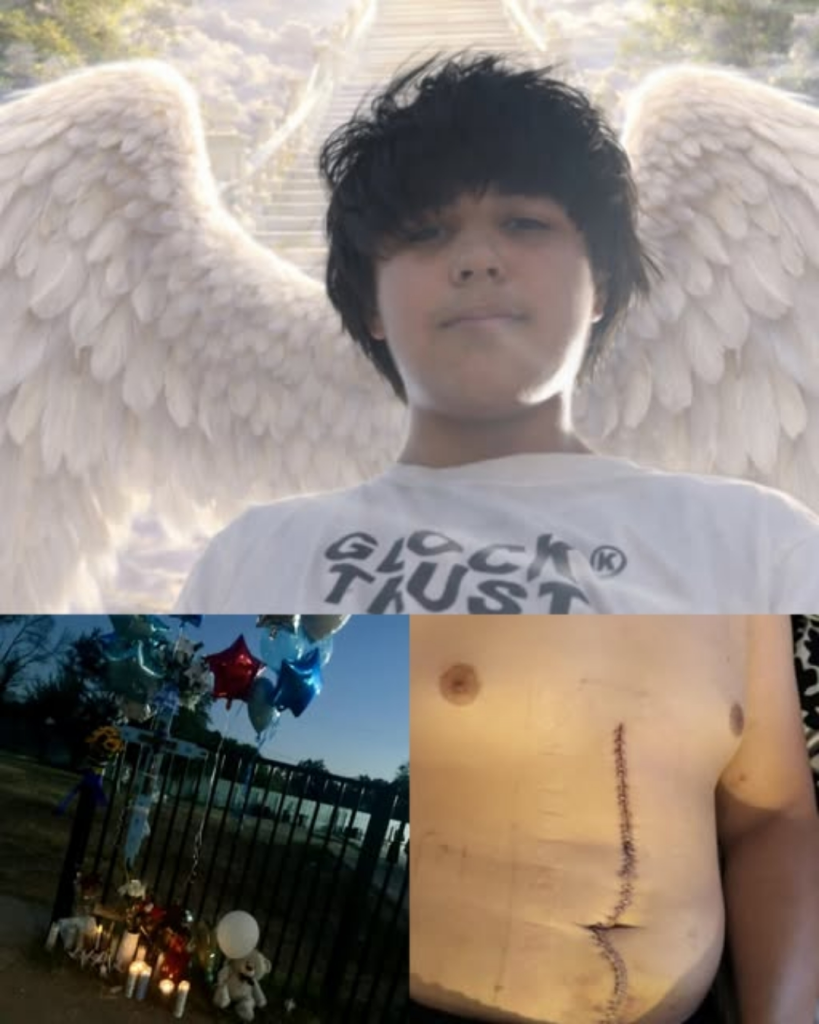
Two months ago, on October 3, 2024, Janet De La Rosa’s life was forever altered by a single, violent act that shattered the heart of her family. The pain of losing her 15-year-old son, Jacob, in a senseless stabbing outside his high school in Fort Worth, Texas, is something no parent should ever have to endure.
Jacob’s story is one of love, loss, and a mother’s plea for accountability—a story that, for Janet, is still unfolding with every day that passes in grief and unanswered questions.
A Life Full of Promise
Jacob De La Rosa was just 15 years old, a freshman full of life and warmth. He was a teddy bear, a kid who adored his family and had an innate kindness that radiated from him.
Janet fondly recalls the moments when Jacob would walk into her room, simply to tell her, “I love you.” These small gestures are the moments that Janet holds onto now, as she tries to make sense of the unimaginable.
“He was the kind of kid who always put others before himself,” Janet says through tears, remembering her son’s gentle nature. “He cared so much about the people around him, and he had so much to give. He didn’t deserve this.”
Jacob had only just turned 15, and though his life was far too short, it was filled with love and the promise of a bright future. He had a way of making everyone around him feel special, whether it was through his contagious laugh or his thoughtful words.
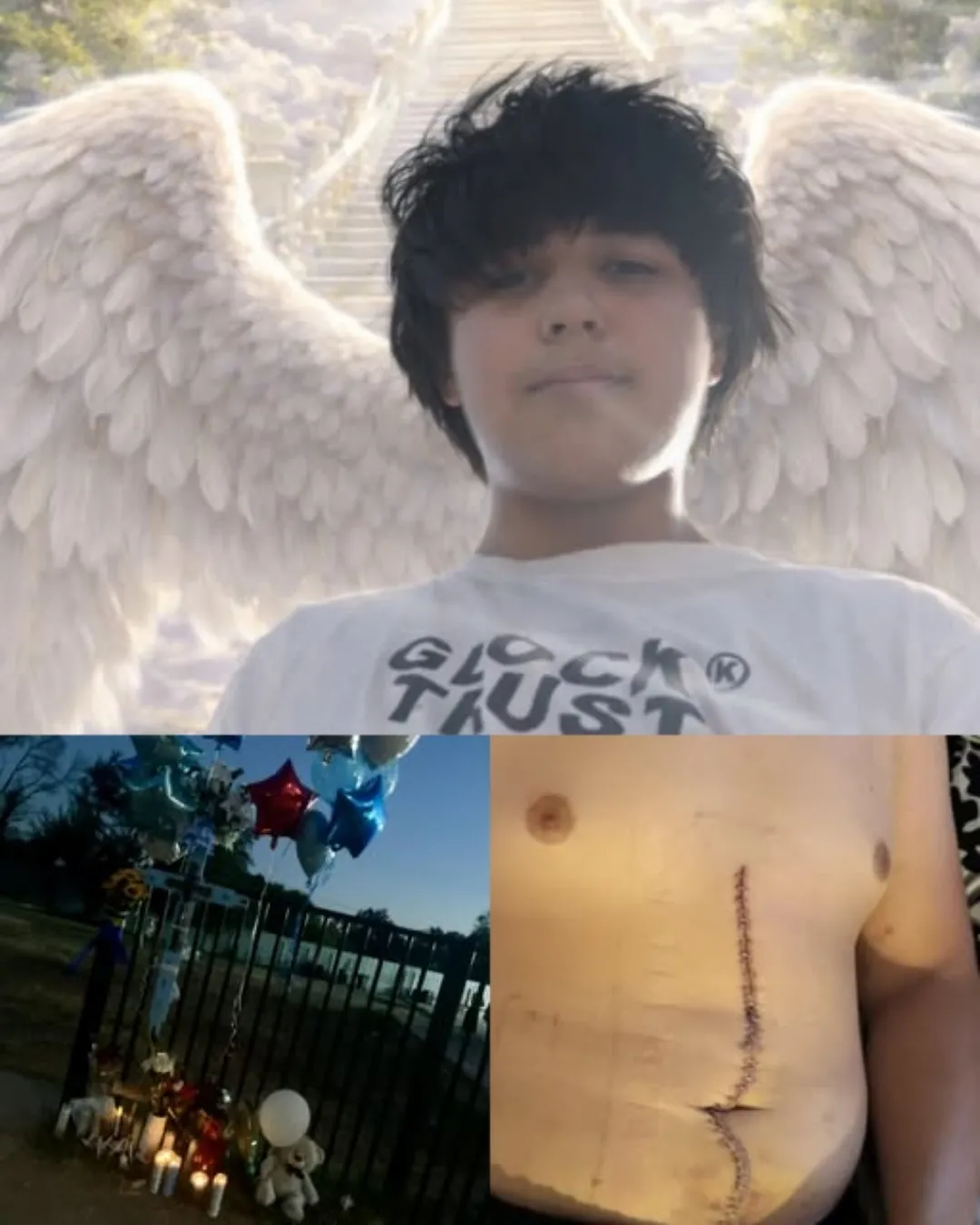
Janet always knew Jacob would grow up to do something great, to make a difference in the world. He had that kind of spirit.
The Day That Changed Everything
The day Jacob was taken from her was like any other at first. He had spent the morning in class, attending his freshman year at the same high school he had walked into only a few weeks earlier, eager to begin his high school journey.
That morning, Janet had no idea that this ordinary day would turn into the darkest of her life.
It all started with a threat—one that Jacob had reported to school officials days earlier. Janet recalls how her son had confided in her about bullying and escalating threats from other students, which he had brought to the attention of his school.
May you like
American War Hero & Coal Miner: The Story of Charles Dennis Buchinsky
A Lifetime of Valor: The Legacy of Colonel Hayden A. Sears
Operation Starlight: The Marines’ First Major Test in Vietnam
But when Jacob reported the threats, Janet says there was no follow-up, no acknowledgment of the severity of the situation. Jacob was left to face his tormentors alone.
Despite the warning signs, the school’s lack of action left Jacob vulnerable, and on October 3, the situation escalated into violence. Jacob was confronted by another student outside of school grounds.
What began as an argument soon turned into a chaotic and tragic altercation, ending with Jacob being stabbed multiple times. One of the wounds was fatal—striking Jacob’s heart.
As paramedics rushed to the scene, Jacob’s father, Albert, was also injured in the attack. Stabbed in the back with a punctured spleen, he was rushed into emergency surgery.
At first, he had no idea that his son, the boy he had raised, had already passed away.
Janet was devastated when she received the news. The life of her son, who had been full of love, kindness, and potential, had been violently and abruptly ended. The loss was incomprehensible, but what followed was perhaps even more painful: the silence.
A Mother’s Pain and the Fight for Justice
The days after Jacob’s death were filled with confusion and heartbreak. Janet couldn’t bring herself to clean the blood from the driveway where her son had fallen. “My truck is still sitting in my driveway with my son’s blood all over it,” Janet shared.
“I don’t have the strength to clean it.” The image of that bloodstained driveway haunts her every day. It serves as a stark reminder of the violence that took her son away and the emptiness that now consumes her heart.
As the investigation into Jacob’s death continued, the Fort Worth police reported that no charges had been filed against the juvenile who admitted to the stabbing, claiming it was in self-defense.
Janet could hardly process this. How could a child—her child—be taken from her in this way? She felt an overwhelming sense of helplessness, compounded by the lack of answers.
“I’m not asking for revenge,” Janet says, her voice breaking. “I’m asking for accountability. I want change. I want parents to listen when their kids say they’re being threatened.
I don’t want any other mother to have to stand in a driveway, staring at blood she can’t bring herself to wash away.”
The silence surrounding her son’s death has been unbearable for Janet. Every day feels like an endless wait for answers that never come.
She waits for justice, for a system to take responsibility for what happened, for a school to acknowledge their failure to protect her son. But the waiting is slow, and the pain is unrelenting.
The Grief of Losing Jacob
Janet is not alone in her grief. Jacob’s father, Albert, still recovering from his own injuries, is grappling with the loss of his son. The pain of losing a child is unimaginable, and for Albert, the trauma of the day’s events lingers in his mind.
He never got to say goodbye to Jacob, and the image of his son’s death will forever haunt him.



“Jacob was my baby boy,” Albert says quietly. “He didn’t deserve this. No one deserves to lose a child this way.”
Janet and Albert are left to hold onto the memories of their son—the moments of laughter, the way Jacob would make everyone smile, the way he walked into their rooms just to say “I love you.”
These memories are bittersweet now, and they serve as reminders of the life they should have shared with Jacob.
In the days following Jacob’s death, a community rallied around Janet and her family. Friends, neighbors, and even strangers offered condolences, prayers, and support.
Many were shocked by the senselessness of the tragedy and the vulnerability that all children face in the world today.
But even with this outpouring of support, Janet is left with a hole in her heart, one that will never be filled.
She clings to the hope that Jacob’s death will not be in vain—that his story will spark change, that his life will inspire others to act when they see something wrong, and that no other parent will have to experience the same agony she has endured.
A Call for Accountability and Change
As Janet shares her pain with the world, she is not just mourning the loss of her son. She is calling for accountability.
She is asking for schools, parents, and communities to take a stand against violence, to listen when children speak up, and to ensure that no child has to endure what Jacob did.
“I don’t want Jacob’s death to be forgotten,” Janet says. “I want people to remember that he was a good kid. He had so much more to give, and this shouldn’t have happened.”
She calls on parents to be vigilant, to have open conversations with their children, and to take action when they notice signs of bullying or threats.
She urges schools to do better—to follow up when students report danger, to provide support to those who need it, and to create a safer environment for everyone.
Most of all, Janet wants to make sure that no other mother has to stand in a driveway, staring at the blood of her child. She wants to ensure that Jacob’s death will lead to change, that something good will come from the pain that has torn her family apart.
“I don’t want any other parent to feel this pain,” she says quietly. “No other child should have to die this way.”
Jacob’s Legacy
Jacob’s story is one of love, loss, and a mother’s determination to make sure her son’s life wasn’t in vain. While his life was tragically cut short, Jacob’s memory lives on in the hearts of those who knew him, in the people who remember him as a kind, caring, and lovable young boy.
Through her grief, Janet is finding the strength to speak out, to demand justice, and to fight for change. Her son’s life may have been taken too soon, but his legacy—his love, his kindness, his spirit—will never be forgotten.
As Janet continues to navigate the painful journey of loss, she holds onto the hope that Jacob’s death will be a catalyst for change. She believes in the power of accountability and the importance of standing up for what’s right.
Jacob may have been taken from this world, but his memory will inspire others to live with kindness, courage, and the strength to stand up against violence.
In the end, Jacob De La Rosa’s story is one of a mother’s unbreakable love and a legacy that will live on, urging the world to never forget the precious life that was lost too soon.
Tank Crew Returns Home: The Story of Four American Tankmen in Italy
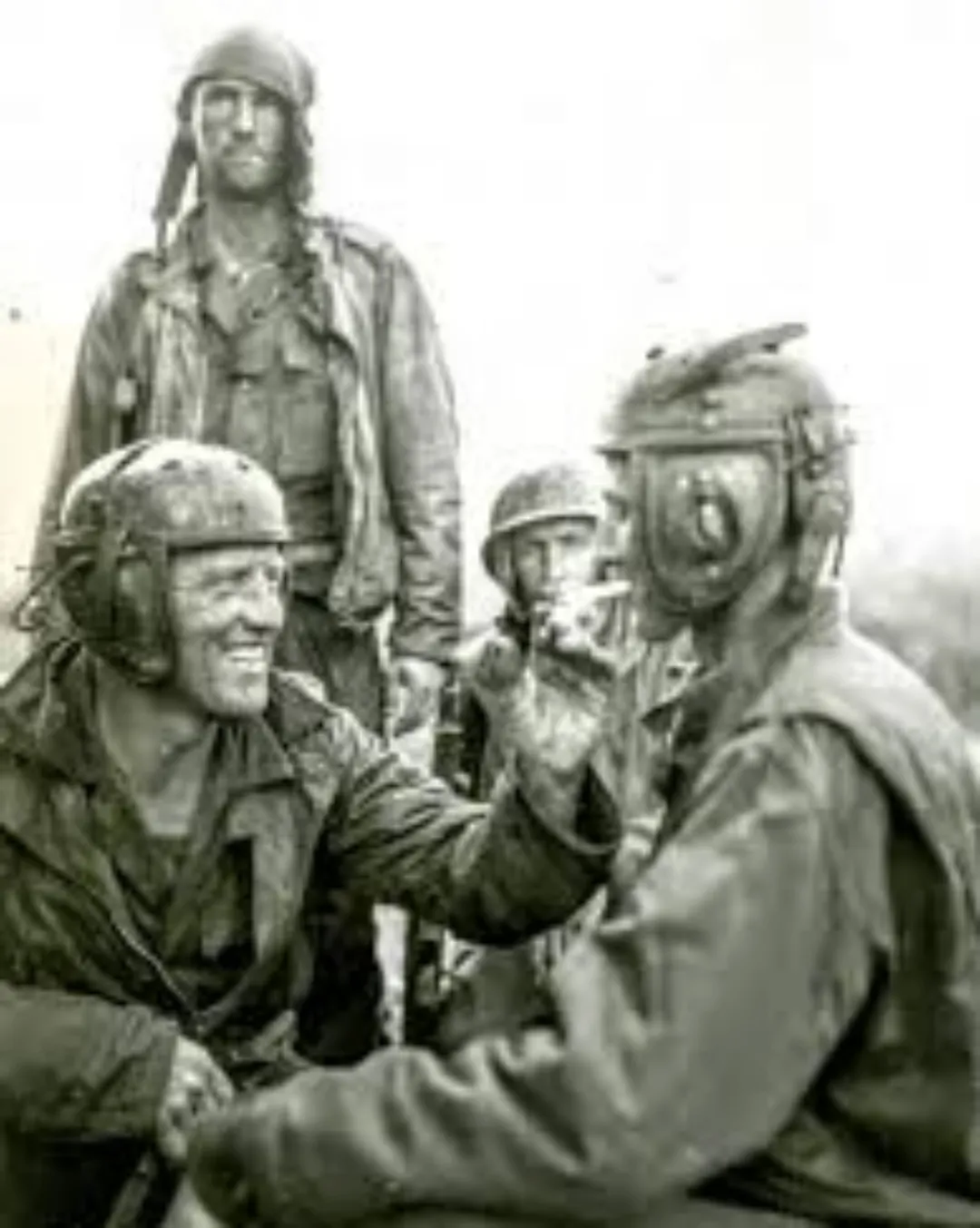
War often reduces history to sweeping battles and grand strategies, but beneath those headlines lie the stories of ordinary men who endured extraordinary moments. One such story is captured in a US Signal Corps photograph dated May 26, 1944, showing four weary American tankmen who had just completed a perilous journey back to American lines near Cisterna, Italy. They had lost their M4 Sherman tank in battle, yet their resolve and determination carried them safely through enemy territory.
The men in the photograph represent the courage and endurance of countless soldiers who fought in the Italian campaign. Pictured in the front row were Private Floyd W. Shelton of Wichita, Kansas, and Private Vassar Nance of Leachville, Arkansas. Standing behind them were Tech 5 Donald Jones of Dexter, New York, and Corporal Earl L. Larson of Minneapolis, Minnesota. Together, these four men formed part of America’s armored spearhead—ordinary citizens turned warriors who bore the weight of war on their shoulders.
The Italian front was brutal, defined by rugged terrain, entrenched German defenses, and relentless combat. Tank crews, in particular, faced immense risks. The M4 Sherman was the backbone of U.S. armored forces, but against German 88mm guns and fortified positions, it was far from invincible. When Shelton, Nance, Jones, and Larson lost their tank near Cisterna, survival became a matter of courage, quick thinking, and sheer luck.
Stranded behind the lines, the men navigated through hostile territory to return to safety. Their escape was not only a testament to their training but also to their willpower. Many crews in similar circumstances never made it back. That day, however, four men from four different states stood together, refusing to give in to despair. Their survival meant one more chance to fight, one more chance to see home again.
Each man’s story continued long after that fateful photograph was taken. Private Floyd Shelton survived the war and eventually settled in Denver, Colorado, where he passed away in 1959 at the age of 51. Private Vassar Nance returned to his hometown of Leachville, Arkansas, carrying with him the memories of battle and brotherhood that would remain for a lifetime. Corporal Earl Larson made it back to Minneapolis, where he resumed civilian life after his tour of duty ended. Tech 5 Donald Jones returned to Dexter, New York, but his life was cut short when he passed away on January 2, 1958.
Their stories, like so many of their generation, are reminders of the quiet sacrifices made by those who wore the uniform. Not all lived long enough to enjoy the peace they helped secure, but all left behind legacies of resilience and duty.
The photograph of these four tankmen near Cisterna is more than just an archival image—it is a window into the humanity of war. In their tired faces, one sees the weight of survival, the cost of combat, and the unbreakable bond of comradeship. They may not have been celebrated generals or decorated aces, but their service was no less vital. They were the backbone of the Allied effort, the ordinary men who did extraordinary things when history demanded it.
As we look back on their journey, we are reminded of the thousands of tank crews who fought across Italy, France, and beyond—many of whom never made it back to their lines, let alone their homes. The survival of Shelton, Nance, Jones, and Larson is a story worth telling, a reminder that behind every victory were men who endured hardships that defy imagination.
“Lest we forget” is more than a phrase; it is a duty. The lives of these four men, and the millions of others who served alongside them, deserve to be remembered not just as soldiers, but as fathers, brothers, and sons who once shouldered the burden of freedom. Their safe return in 1944 was a small victory within a vast and brutal war. Their legacy endures as part of the larger story of America’s greatest generation.Continue reading
He Went Up the Mountain Before Dawn and Never Came Back.
Dawn came slowly to the high country that Friday, the kind of pale winter light that makes the m…A Mother, a Prophecy, and a List That Ended Two Lives.Lori was the kind of mother people pointed to in the church parking lot, the kind whose laughter sou…She Was a Domestic Violence Counselor and a New Mother in Pain—Until the Night She Crossed the Guardrail at Niagara Falls With Her Two Children.The spray at Niagara Falls always looked like breath from something alive.A white, constant exhale t…A Quiet Georgia Town, a 911 Call, and the Teen Girl Accused of Killing Her Parents as They Slept.The quiet rural calm of Tyus, Georgia, was torn apart by a crime so disturbing that even seasoned in…A Routine Call on a Quiet Summer Night Ended the Life of 26-Year-Old Officer Mohamed Said in Melvindale.The summer night of July 21, 2024, settled gently over the city of Melvindale, Michigan.The air was…
Powered by Metaconex

Leave a Reply