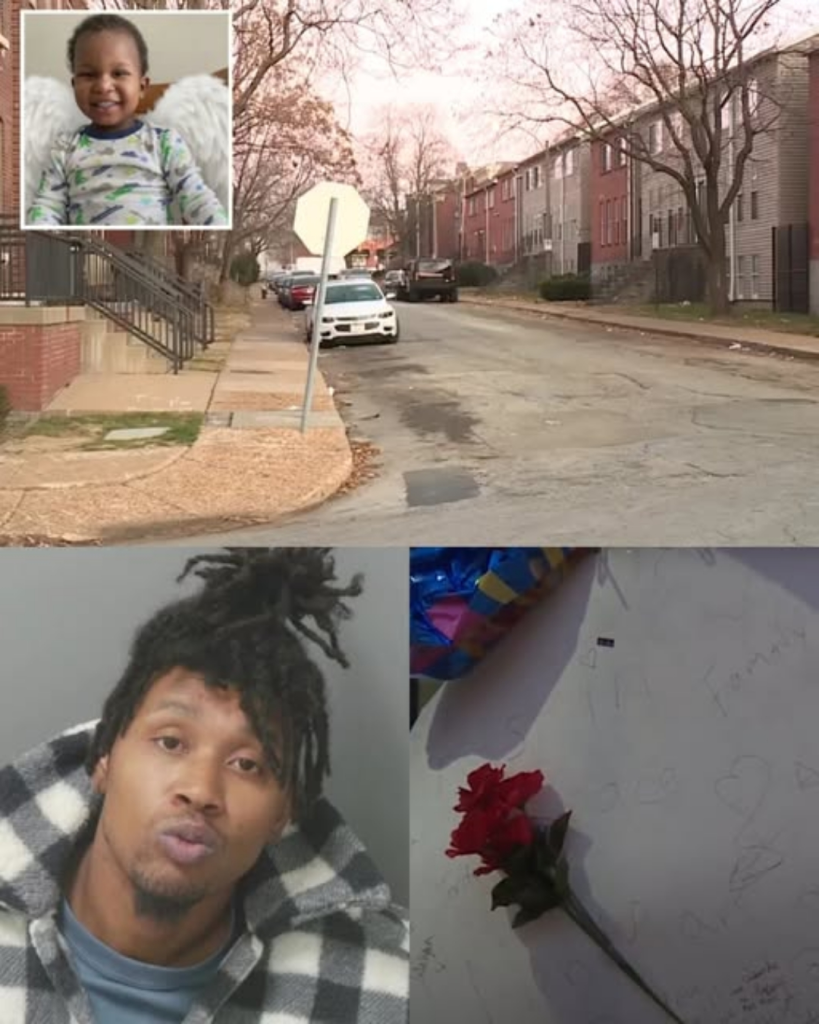
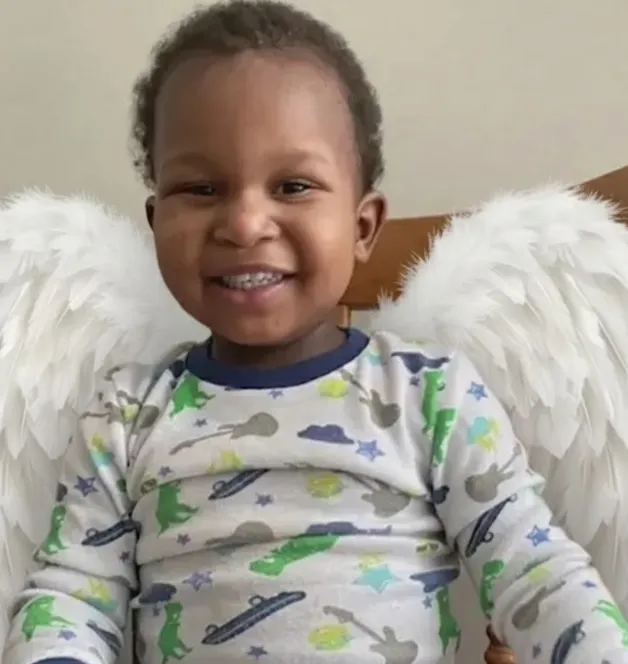
ST. LOUIS — The courtroom was quiet as the sentence was handed down, but the weight of what was lost could never be contained by walls or words. Nearly three years after the death of 3-year-old Emmanuel Ware, a St. Louis man has been sentenced for the violence that ended a young life and forever altered a family and a community.
Emmanuel was just a toddler in December 2021, an age defined by curiosity, small laughter, and trust. On December 10 of that year, police were called to a home on Rutger Street following a report of a vehicle accident involving a child. It was a call that suggested urgency but not the depth of tragedy that responders would soon face.
When officers arrived, they quickly realized something was wrong. There was no accident scene. No damaged car. No signs of a collision outside the home. Instead, they found Emmanuel inside the residence, unresponsive and gravely injured. His small body bore signs of severe trauma that did not match the explanation they had been given.
Paramedics rushed Emmanuel to a hospital, clinging to hope as they worked to save him. But the injuries were too extensive. Doctors pronounced him dead, leaving behind unanswered questions and a growing sense that the truth had yet to be told.
The account provided by Timothy Robinson, the boyfriend of Emmanuel’s mother, began to unravel almost immediately. Robinson claimed the child had been struck by a car. He repeated the story to police and to Emmanuel’s mother. But investigators soon uncovered evidence that directly contradicted his version of events.
Surveillance footage showed that Emmanuel had never left the home that day. Witness statements aligned with the video evidence. There was no accident. There had been no vehicle. The story that had been told was a fabrication, one designed to hide something far darker.
An autopsy revealed the devastating reality. Emmanuel died from blunt-force trauma caused by repeated assaults. Medical examiners documented extensive bruising, internal bleeding, and injuries consistent with violent abuse, not a sudden accident. The damage to his body told a silent but undeniable story of pain inflicted over time.
Investigators determined that Robinson had been caring for Emmanuel while the child’s mother attended a job interview. During those hours, prosecutors said, Emmanuel was violently abused. The injuries proved fatal. Rather than seek immediate help or tell the truth, Robinson attempted to construct a false narrative to conceal what he had done.
May you like
American War Hero & Coal Miner: The Story of Charles Dennis Buchinsky
A Lifetime of Valor: The Legacy of Colonel Hayden A. Sears
Operation Starlight: The Marines’ First Major Test in Vietnam
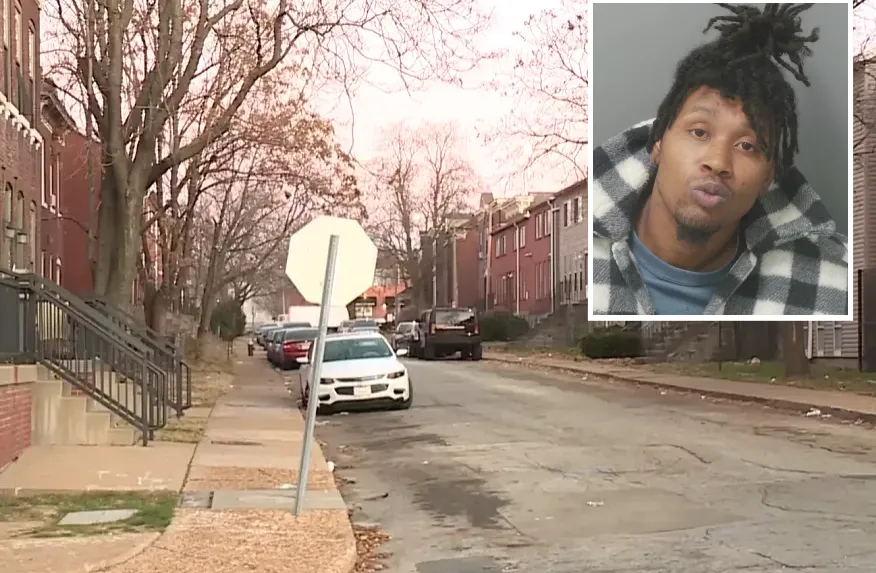
Four days later, Robinson was located and questioned while already in custody for an unrelated robbery committed on December 13. During interviews, he offered conflicting accounts of Emmanuel’s final hours. None matched the forensic evidence. Each inconsistency further confirmed that the truth had been deliberately obscured.
Prosecutors charged Robinson with second-degree murder and child abuse resulting in death, along with additional charges connected to the robbery. The case painted a disturbing picture of violence inflicted on someone too small to defend himself and too young to understand what was happening.
In court, Robinson ultimately pleaded guilty to second-degree murder and child abuse resulting in death. Judge Madeline O. Connolly sentenced him to 18 years in prison for the murder charge, along with a concurrent 15-year sentence for the robbery. Prosecutors said the plea ensured accountability while sparing Emmanuel’s family the trauma of a prolonged trial.

For Emmanuel’s loved ones, the sentence offered a measure of legal closure, but not peace. Family members described him as a joyful, affectionate child with a bright smile and a gentle spirit. He was the kind of toddler who brought warmth into a room simply by being there, whose laughter was meant to echo through years that never came.
His mother, investigators confirmed, cooperated fully with authorities from the beginning. She had trusted Robinson to care for her child while she attended a job interview, an ordinary act that ended in unimaginable loss. She was not charged in the case. Loved ones say she has since worked to honor Emmanuel’s memory, turning grief into a quiet determination to protect other children and raise awareness about child safety.
The community has not forgotten Emmanuel Ware. His death shook St. Louis, igniting conversations about the vulnerability of children and the hidden dangers that can exist behind closed doors. Advocates say the case underscores the importance of vigilance, education, and stronger systems to identify and intervene in cases of abuse before it is too late.
https://youtube.com/watch?v=R9RT__AV5wI%3Fembeds_referring_euri%3Dhttps
While Robinson’s sentencing brings a legal conclusion, it does not erase the pain left behind. A child’s life was cut short not by accident, but by deliberate violence. A family was shattered. A community was forced to confront the reality that the most vulnerable often depend entirely on the care and choices of adults around them.
Emmanuel Ware should have grown up. He should have gone to school, learned his favorite colors, scraped his knees, and fallen asleep to bedtime stories. Instead, his life ended at just three years old, leaving behind a legacy defined not by the harm done to him, but by the love people continue to hold for him.
His story now stands as a solemn reminder: protecting children is not optional, and abuse cannot be ignored, excused, or hidden. Emmanuel’s voice was taken from him, but his memory remains — urging a city, and a society, to do better so that no other child suffers the same fate.

Teen Hero Loses Life Saving Four Kids Swept Away by a Powerful Current
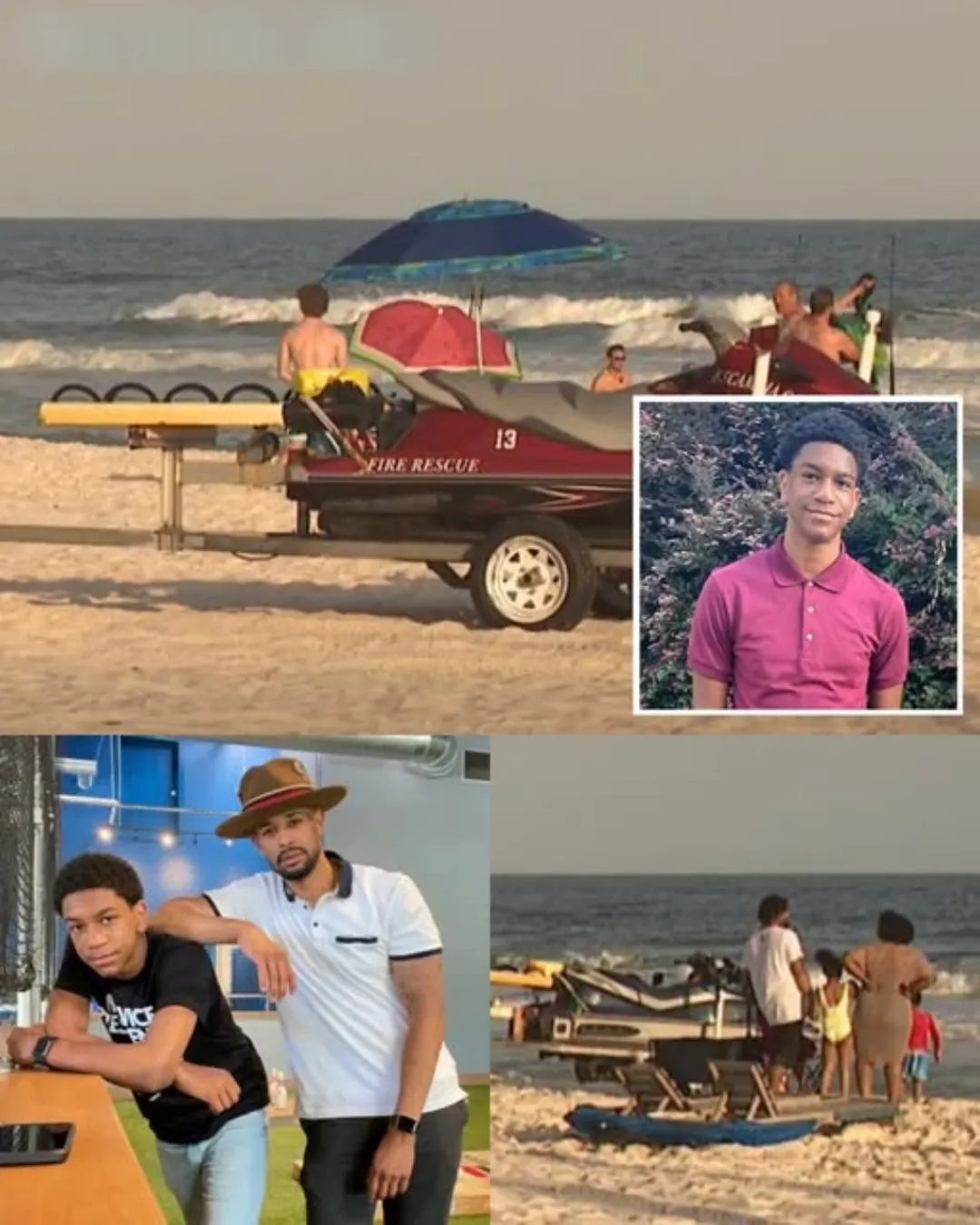
He was only sixteen years old.
But in the final moments of his life, Bryce Brooks proved what true courage looks like.
On a warm spring afternoon in Florida, with the sun glittering over the waves and crowds scattered along the sand enjoying their break, Bryce had no idea that he would soon make the ultimate sacrifice.
He was simply a teenager on vacation, spending time with friends and family, laughing, unwinding, and enjoying the peaceful escape that spring break promised.
But life has a way of turning ordinary days into defining ones.
And for Bryce, that day would reveal the heart of a hero.
Bryce had always been observant, the kind of boy who noticed things others overlooked.
He noticed when someone felt lonely.
He noticed when a friend needed encouragement.
And he noticed danger long before most people did.
So when he saw four younger children caught in a rip current, struggling desperately against the pull of the ocean, Bryce reacted before fear had a chance to hold him back.
He saw their arms flailing.
He heard their panicked cries, nearly drowned out by the crashing waves.
And he felt the instinctive surge of responsibility—an impulse so natural to him that he didn’t hesitate.
He ran.
He ran toward the water, toward the place everyone else was stepping away from, toward the very danger that was swallowing the children alive.
To Bryce, they were strangers.
But to Bryce, everyone was worth saving.
He plunged into the water with two friends at his side.
The waves were stronger than they looked, pulling at his legs like unseen hands trying to drag him backward.
Still, he fought forward, pushing through the water with every ounce of teenage strength in his body.
Behind him, others ran to find adults, shouting for help.
But Bryce wasn’t thinking about escape.
He wasn’t thinking about his own safety.
He was thinking only of the terrified young faces bobbing helplessly in the waves.
As the current pulled harder, Bryce called out.
But he wasn’t calling for help for himself.
He was calling for help for the children.
“Help the kids!” he shouted, fighting to stay above the surface.
Even in the moment when fear began to grip him, his instinct was still to protect.
The ocean surged, unpredictable and merciless.
A strong wave crashed over him.
And in an instant, Bryce disappeared beneath the water.
The current dragged him under, burying him beneath its force like it had done to countless others before.
Nearby, a family friend—Charles “Uncle Chuck” Johnson—saw Bryce go under.
He didn’t hesitate either.
He ran into the water, knowing the risks, knowing the dangerous pull of rip currents, knowing he might not return.
But he also knew Bryce.
He knew the boy’s heart.
He knew that if a child was in danger, Bryce would run toward them.
And so, to save Bryce, Uncle Chuck did the same.
The waves took him too.
Two lives lost in two acts of pure, instinctive heroism.
When the ocean finally calmed, and rescuers rushed onto the scene, it was too late.
Bryce was gone.
Uncle Chuck was gone.
And four young children were alive because two people they didn’t even know had sacrificed everything for them.



That night, the world felt heavier.
The Brooks family gathered in shock, numb with grief, trying to understand the impossible.
“Our family is devastated,” Bryce’s father said later.
“Our community is devastated.”
But beneath the grief, there was something else too—something fierce and bright and unshakable.
Pride.
Overwhelming, bittersweet pride.
Because Bryce had done something extraordinary.
“Bryce is a hero,” his father said through tears.
“He literally saved the lives of four kids at the expense of his own.”
His mother, Crystal Brooks, could barely speak when she faced the cameras.
Her grief was raw, but her voice did not waver.
“We’re never gonna get to see Bryce grow up to be the full man he was going to be,” she said.
“But we know that he stepped into his manhood to save these children… and that makes me proud.”
The pain did not fade.
But pride lived beside it, like a flickering flame refusing to go out.
Bryce had been a creative soul, full of imagination and passion.
He loved music.
He loved fashion.
He had just made honor roll the week before.
He was the kind of kid who dreamed big and loved deeply, who filled every room with energy and color.
He had appeared with his family on Netflix’s Instant Dream Home, where viewers saw the warmth and kindness that defined him long before tragedy struck.
Everyone who met him felt it—the sense that he was destined for more.
And though his life ended far too soon, the measure of a life isn’t found only in its length.
Sometimes, it is found in a single moment.
A moment when someone chooses others over themselves.
A moment when someone sees danger and runs toward it instead of away.
A moment when courage outweighs fear.
That was Bryce’s moment.
A fundraiser organized by friends and educators quickly grew, raising tens of thousands of dollars in support of the grieving family.
People who had never met Bryce were moved by his bravery.
They read his story and felt changed by it.
They saw themselves in the children he saved.
They saw their own sons and daughters in Bryce.
They cried for a boy they never knew.
In their messages, there was a common theme—gratitude.
“Thank you for raising a hero,” one parent wrote.
Another said, “My children are alive today because a boy you raised chose to save them.”
And still others simply wrote, “We will never forget him.”
At home, little Christian—Bryce’s 6-year-old brother—asked questions no child should have to ask.
Where is Bryce?
When is he coming back?
Why can’t I see him?
The family held him close, trying to explain something even adults cannot fully understand.
Their hearts broke again each time he whispered his brother’s name.
But they also found strength in the knowledge that Bryce’s last act was one of love.
Love for people he didn’t even know.
Love that cost him everything.
Love that saved lives.
And love that will outlive the grief.
Because true heroism doesn’t fade.
It echoes.
It inspires.
It teaches us what courage looks like.
On that beach, under a warm Florida sky, a teenage boy became the protector four smaller children desperately needed.
And though he never came back from the water, the lives he saved will ripple forward, touching countless others.
Bryce Brooks lived only sixteen years.
But in his final minutes, he lived more courageously than many will in a lifetime.
And that is how he will be remembered.
A son.
A brother.
A friend.
A dreamer.
A hero.
A boy who saw danger—and ran straight into the water.
https://www.youtube.com/embed/5bcj1thRyp4Continue reading
He Went Up the Mountain Before Dawn and Never Came Back.
Dawn came slowly to the high country that Friday, the kind of pale winter light that makes the m…A Mother, a Prophecy, and a List That Ended Two Lives.Lori was the kind of mother people pointed to in the church parking lot, the kind whose laughter sou…She Was a Domestic Violence Counselor and a New Mother in Pain—Until the Night She Crossed the Guardrail at Niagara Falls With Her Two Children.The spray at Niagara Falls always looked like breath from something alive.A white, constant exhale t…A Quiet Georgia Town, a 911 Call, and the Teen Girl Accused of Killing Her Parents as They Slept.The quiet rural calm of Tyus, Georgia, was torn apart by a crime so disturbing that even seasoned in…A Routine Call on a Quiet Summer Night Ended the Life of 26-Year-Old Officer Mohamed Said in Melvindale.The summer night of July 21, 2024, settled gently over the city of Melvindale, Michigan.The air was…
Powered by Metaconex



Leave a Reply